
Review · MAUI ZIPLINE TOURS
Haleakala 6 Line Zipline Adventure
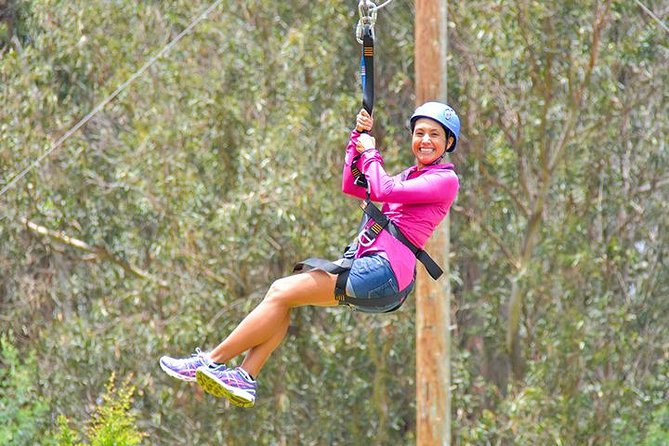
The best part of this Haleakala outing is the mix of real mountain scenery and fast-moving fun. You zip across canyons, pass through fragrant eucalyptus trees, and cross a wooden-plank bridge high above the forest floor, all on the upper slopes of Maui’s great volcano.
I like the guides’ role here. Casey, Jackson, Ray, Anika, Noah, Po, and others are praised for keeping nervous first-timers calm while adding useful stories about native birds, ranching, plantation history, and conservation. I also like the small group size, capped at 12 people. The main drawback is value: at $157.02 per person, you may want more widely spaced lines than this two-hour course provides.
Key points to know before you book
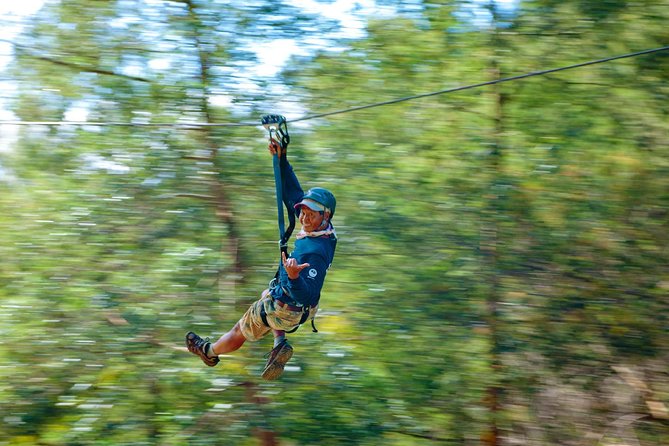
- Six ziplines, including an intense final pendulum line: The course sends you over canyons and drops of up to 90 feet, with the last ride described as especially thrilling.
- A half-mile hike links the platforms: You need to handle uneven ground, stairs, and short walks between lines.
- Haleakala views come with cooler mountain air: Bring a light layer, even if it feels hot near the coast.
- Guides do more than clip you in: Expect information on Maui’s birds, ecosystem, ranching past, plantation history, and preservation work.
- The location works well with a Haleakala day: The meeting point sits a few miles from Haleakala National Park’s entrance, making it easy to pair with other upcountry plans.
- The rules matter: Participants must be at least 8 years old, weigh between 60 and 260 pounds, wear closed-toe shoes, and check in 30 minutes early.
Six lines above Maui’s forest floor
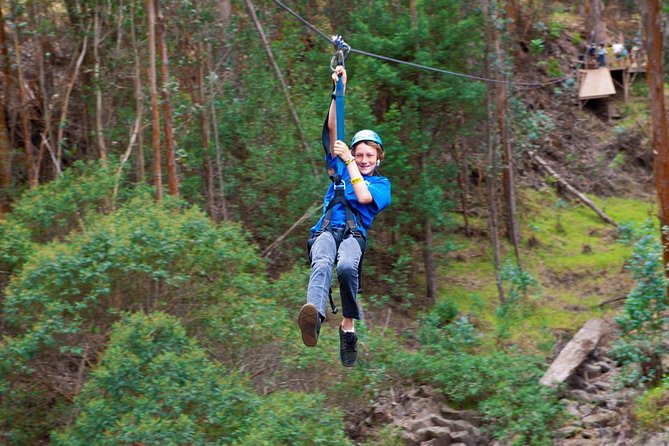
Skyline Hawaii’s Haleakala course gives you a brisk introduction to ziplining without turning the day into a full expedition. The activity lasts about two hours, with roughly 1.5 hours spent on the active course and the rest used for check-in, instruction, equipment, movement between platforms, and group handling.
The setting does much of the work. This is not a beach activity with a distant mountain view. You are on the slopes of Haleakala, a few miles from the entrance to Haleakala National Park, surrounded by tropical forest and eucalyptus trees. Several lines cross large canyons, and some pass above drops of about 90 feet.
The supplied details describe five lines in the main overview, then refer to six lines in the full experience. The safest way to understand it is as a six-line course, with the final ride offering a pendulum-style finish. That last line has been singled out as intense, so it can provide a strong ending for anyone who wants more than a gentle glide.
You will not simply sit in a harness and repeat the same ride six times. The course includes a wooden-plank bridge and short hikes between stations. Those transitions give you time to look around, listen to the guide, and catch your breath before the next launch.
A few more adventure days around the USA worth a look
- Koloa Zipline in Kauai
★ 5.0 · 6,764 reviews - Oahu’s North Shore: 8-Line Zipline Adventure
★ 5.0 · 3,616 reviews - 7-Line Zipline Experience in Sevierville
★ 5.0 · 2,872 reviews
From check-in to the first platform
Your meeting point is Skyline Hawaii, Haleakalā Zipline Tours, at 18-303 Haleakala Highway in Kula. There is no hotel pickup, so you need to arrange your own transportation and allow enough time to find the site.
The operator asks you to arrive 30 minutes before your scheduled start. Take that seriously. Check-in includes weighing participants, fitting the required equipment, and confirming that everyone meets the age, weight, and health rules. The course accepts participants from age 8, but anyone under 16 must be with an adult.
The weight range is 60 to 260 pounds. This is not a detail to hide from the person making the booking, since the operator says tickets can be non-refundable if a participant does not meet the requirements at check-in. You also need to be able to walk half a mile over uneven ground.
Closed-toe shoes are required. Shorts and short-sleeve shirts are recommended, but mountain weather can shift from the warmer coast, and one participant specifically found the upper elevation noticeably cooler. I would wear comfortable outdoor clothes and bring a light jacket that can stay in the car or with the group if permitted.
After the safety briefing, your guides explain how to use the braking system and how to position your body. The exact style may vary by guide and line, but the main goal is clear: listen closely before you launch, then follow instructions at every platform.
The bridge and forest walk
The wooden-plank bridge is an important part of the outing because it breaks up the rides with a slower, more exposed section. You walk above the forest floor rather than simply passing through it at speed. For anyone uneasy with heights, this may be the point where the setting feels most immediate.
The bridge also gives guides a natural place to talk. The course sits in an area tied to Maui’s ranching and plantation past, and the guides add context about the land and current efforts to protect its plants, birds, and wider ecosystem. Several guide teams, including Casey and Jackson, Ray and Anika, and Po and Ray, have been praised for making these talks interesting without letting them take over the active part of the day.
You may hear about special Maui birds and the pressures facing the local environment. The conversation is not just filler between zip lines. It helps explain why the course is located here and why the views include more than attractive trees and open sky.
The walk itself is short by hiking standards, but it is not completely flat or effortless. The half-mile requirement is a better guide than the two-hour duration. If you can comfortably manage uneven terrain and short uphill or downhill sections, the physical side should be reasonable. If you have mobility limits, ask before booking rather than assuming the course is easy because the rides are assisted.
The rides: canyon crossings and eucalyptus views
The zip lines are designed to give you a sequence of quick bursts rather than one long ride. You cross canyons, pass over open drops, and move through eucalyptus trees. The scenery changes as you go, but the strongest views come from the combination of height and open mountain slopes.
I like this format for first-timers. You have several chances to get comfortable. The first line lets you learn how the harness feels and how the platform routine works. Later lines add confidence and speed, while the guides remain close by to help with positioning and landing.
The setting also gives experienced zipliners something to appreciate. People who have tried several courses may find the lines fairly short or close together for the price. One person specifically wanted more lines and greater spacing. That is a fair criticism at $157.02, especially if your main goal is maximum ride time.
Still, the course is not selling only minutes in the air. You are paying for equipment, trained guides, a small group, the forest walk, the bridge, and access to a mountain setting near Haleakala. If you value scenery and local interpretation along with the thrill, the price makes more sense. If you measure value by the length and number of lines alone, you may find it expensive.
Same canopy, a different kind of drop:
- 7-Line Maui Zipline on the North Shore
★ 4.5 · 1,648 reviews - Maui Zipline Eco Adventure: 8 Lines through the Jungle
★ 5.0 · 1,398 reviews - The EDGE: Zip Line Tour
★ 5.0 · 1,153 reviews - Big Island Zipline Tour Near Akaka Falls (250-ft Waterfall!)
★ 5.0 · 1,077 reviews
Guides who shape the whole experience
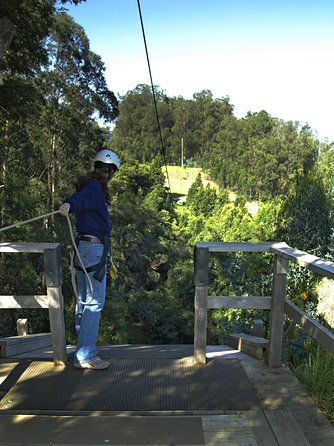
The guides are the most consistently praised part of this outing. Names appearing in the guide teams include Casey, Jackson, Ray, Anika, Noah, Ian, Po, Alec, Zack, Lindy, Gen, Elena, Vince, Joe, and Randall. Your particular team will depend on the departure, but the pattern is clear: the staff combine safety instruction with jokes, stories, and encouragement.
That matters most if you are nervous. One first-time participant arrived afraid of heights and found that Casey and Jackson’s friendly approach made the activity manageable. Another family said the guides helped young people feel safe while keeping the mood lively.
The staff also have to manage mixed groups. A single departure can include adults, teens, children, experienced zipliners, and people who are trying it for the first time. The strongest guide comments describe a balance between fun and attention to safety, including keeping energetic children under control without making the rest of the group wait in silence.
Ray is often associated with jokes and stunts, while Casey, Anika, Noah, and others are praised for clear explanations and a warm manner. Do not book on the assumption that a particular guide will lead your tour, but you can expect the guide to be a major part of the experience rather than a background operator.
Maui history and conservation between the thrills
A useful feature of the course is the way it connects recreation with place. The guides talk about Maui’s natural environment, native birds, ranching, plantation history, and efforts to preserve the ecosystem.
The information appears in short pieces along the route, which is the right format for an active outing. You are not sitting through a long lecture. Instead, a guide may point out a feature of the forest, explain a local connection, or give background while the group moves to the next platform.
The operator also presents the course as contributing to preservation work. Treat that as part of the tour’s stated purpose, not as a reason to ignore the price or safety rules. If supporting an activity with an environmental focus matters to you, this adds value. If you mainly want nonstop rides, the pauses may feel like lost airtime.
I would especially recommend paying attention during the quieter sections. The flights are easy to remember, but the short talks help you understand the mountain setting and the land’s human history. They also make the outing feel more connected to Maui than a standard amusement-park ride.
How to fit it into a Haleakala day
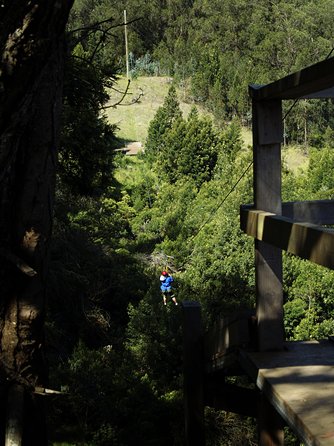
The zipline base sits partway up the road toward Haleakala National Park. That makes it a practical addition to an upcountry day, but you should plan your timing carefully.
A morning or afternoon departure can be paired with other Kula or Haleakala plans, depending on your schedule. The activity ends back at the same meeting point, so you can continue by car afterward. One possible day plan is ziplining first, a local meal afterward, then a drive higher toward Haleakala for sunset or stargazing. That sequence comes directly from the timing possibilities, not from any promise that the operator provides food or transport.
Food and drinks are not included. Bring your own plan for eating before or after the course, but do not assume you can pause for a meal during the two-hour activity.
The weather can also change as you gain elevation. Even when beaches are warm, the zipline area may feel cool. A light layer is practical, and closed-toe shoes are mandatory regardless of temperature.
Who will enjoy this course most
This is a strong choice for families with children age 8 and older, couples, groups of friends, and first-time zipliners. The 12-person maximum keeps the group from becoming unwieldy, and the guides appear used to helping people with different comfort levels.
Teens should have plenty to enjoy. The course supplies real height, canyon crossings, and a final pendulum line rather than a mild park ride. Parents should still check that younger participants meet the weight and walking requirements, and children under 16 need an adult with them.
It also suits people who want a little more from a zipline outing than pure speed. The forest, bridge, Haleakala setting, and local stories give the activity a sense of place.
I would be more cautious if you dislike heights, have trouble walking on uneven terrain, or want a long, high-speed course with widely separated lines. The guides can help with nerves, but no friendly joke removes the drop below your feet. People who have not met the physical rules may be turned away at check-in without a refund.
You also must not have been scuba diving within 24 hours of the tour. That health restriction is easy to overlook when planning a trip packed with ocean activities.
Price, timing, and cancellation
At $157.02 per person, this is a significant half-day expense for a two-hour activity. The price is easier to justify if you value the Haleakala setting, the small group, the safety supervision, the bridge, the ecology talks, and the convenience of a course near the national park.
It is harder to justify if you want the greatest possible number of long lines. The active course is about 1.5 hours, and the lines are not described as widely spaced. You should compare your priorities before paying.
The activity is offered in English and uses mobile tickets. Confirmation normally arrives at booking, though reservations made within seven days of the date may receive confirmation within 48 hours, subject to availability.
Free cancellation is available up to 24 hours before the start time for a full refund. Changes or cancellations made within 24 hours are not accepted for a refund. The operator also requires a minimum number of participants, so a cancellation by the company could lead to another date, another activity, or a full refund.
Should you book the Haleakala zipline?
Book it if you want an active Maui outing with forest scenery, mountain air, and guides who add real local context. It is especially good for a family or mixed-age group that needs patient instruction, humor, and a clear focus on safety.
Think twice if $157.02 feels high for six relatively compact lines, or if your main goal is a long, nonstop zipline course. For the best fit, combine it with an upcountry drive, allow time for check-in, wear sturdy closed-toe shoes, and bring a light layer.
My call: this is worth booking for the Haleakala setting and excellent guide-led experience, not simply for the number of minutes spent in the air.
FAQ
Where does the Haleakala zipline tour start?
It starts at Skyline Hawaii, Haleakalā Zipline Tours, 18-303 Haleakala Highway, Kula, Hawaii 96790.
How long does the activity last?
The activity lasts approximately two hours. About 1.5 hours are spent on the zipline adventure itself.
How many ziplines are included?
The experience includes six ziplines. The overview describes five lines, while the full activity details refer to six, including a final pendulum-style line.
What age can participate?
Participants must be at least 8 years old. Children under 16 must be accompanied by an adult.
Are there weight requirements?
Yes. Participants must weigh between 60 and 260 pounds, and everyone is weighed at check-in.
What should I wear?
Closed-toe shoes are required. Shorts and short-sleeve shirts are recommended, but a warmer layer can be useful because the Haleakala elevation may feel cooler.
Can I cancel for a refund?
You can cancel up to 24 hours before the start time for a full refund. Cancellations or changes made less than 24 hours before the start time are not accepted for a refund.
Just added around the USA
- Hakalau: 9-Line Zipline Adventure with Umauma Falls View★ 4.5 · 7 reviews
- Twin Falls: Zip Line Tour★ 4.1 · 8 reviews
- Tree Tops Zip Line Canopy Tour★ 5.0 · 32 reviews
- New River Gorge, WV – Zip Line Tour★ 5.0 · 7 reviews
- Zipline Canopy Tour- ArborTrek at Smugglers Notch Resort★ 5.0 · 9 reviews
- Wildman Zip Line Tour★ 5.0 · 10 reviews
- Zipline and Adventure Tower at Ryze Adventure in Missouri★ 5.0 · 4 reviews
- Aerial Adventure Ropes Course in Sitka★ 5.0 · 12 reviews
Maui Zipline Tours, compared.
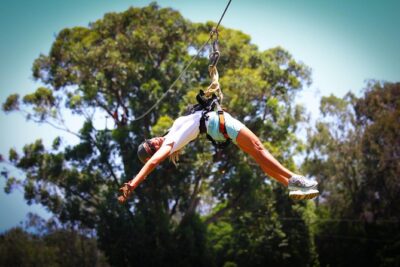
Maui Zipline Eco Adventure: 8 Lines through the Jungle
Read our review →
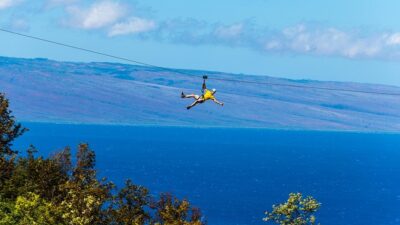
Maui 8 line Zipline Adventure: Soar above valleys & Island views
Read our review →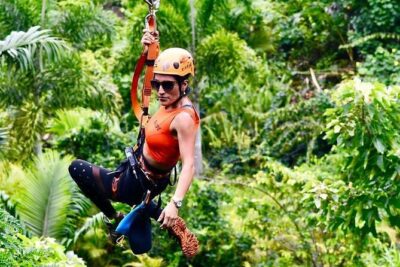
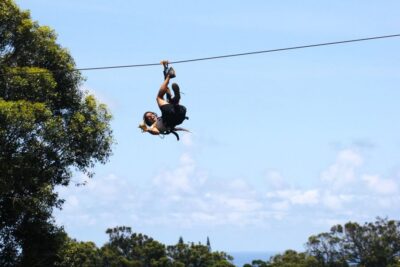
North Maui: 7 Line Zipline Adventure with Ocean Views
Read our review →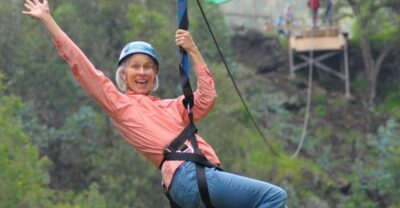
Browse the lists this tour appears in