
Review · SPAIN ZIPLINE TOURS
Caminito del Rey: Vía Ferrata Rappeling & Zip-Lining
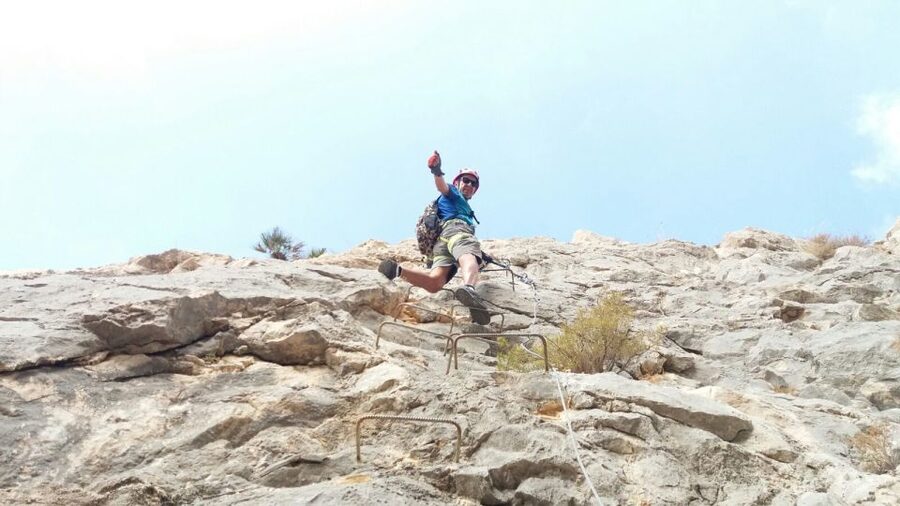
The most exciting part of this three-hour Via Ferrata is the steady change of pace. You climb a rock wall, cross a Tibetan Bridge, zip 30 meters through the gorge, and finish with an abseil and a choice of rappel or a walking descent.
I like the small groups of up to eight people, which gives guides Ian and Rachel time to help when nerves kick in. I also like the mix of views and physical challenge: you can look toward El Chorro village and its train station while working your way up the rock. The main drawback is clear: this is not a casual sightseeing walk. Vertigo, limited mobility, pregnancy, or weak physical fitness can make the route a poor fit.
Key points to know before booking
- The route climbs a vertical rock wall before reaching its bridges and zip-line.
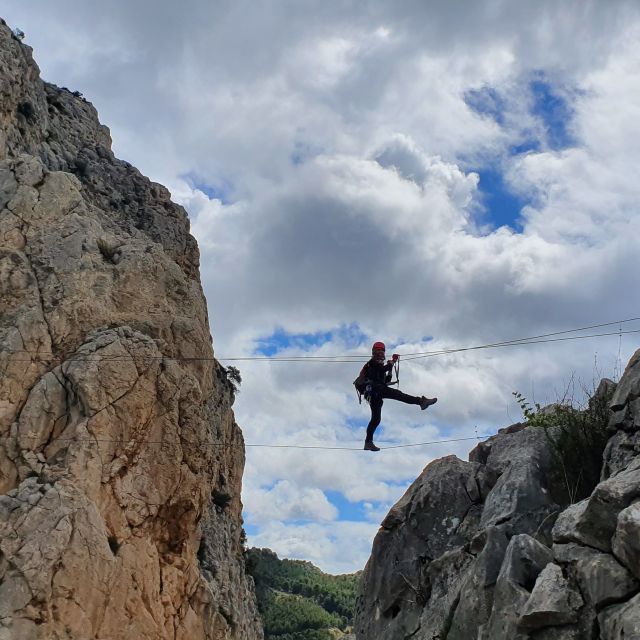
- The 30-meter zip-line adds a quick, playful burst to an otherwise demanding climb.
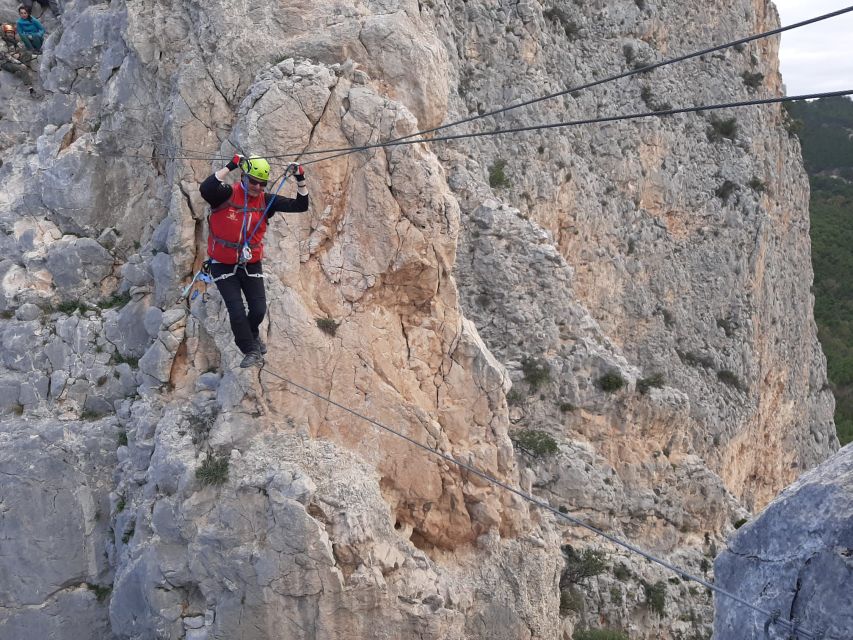
- You cross both a Tibetan Bridge and a final monkey bridge, with exposure and height throughout.
- The descent includes an abseil, followed by a choice between more rappelling and walking along the Via Ferrata.
- Ian and Rachel are praised for calm, patient instruction, especially when participants feel nervous.
- The $71 price includes equipment, guides, water, and a drink, but not transport, food, or certain insurance cover.
A mountain course above El Chorro
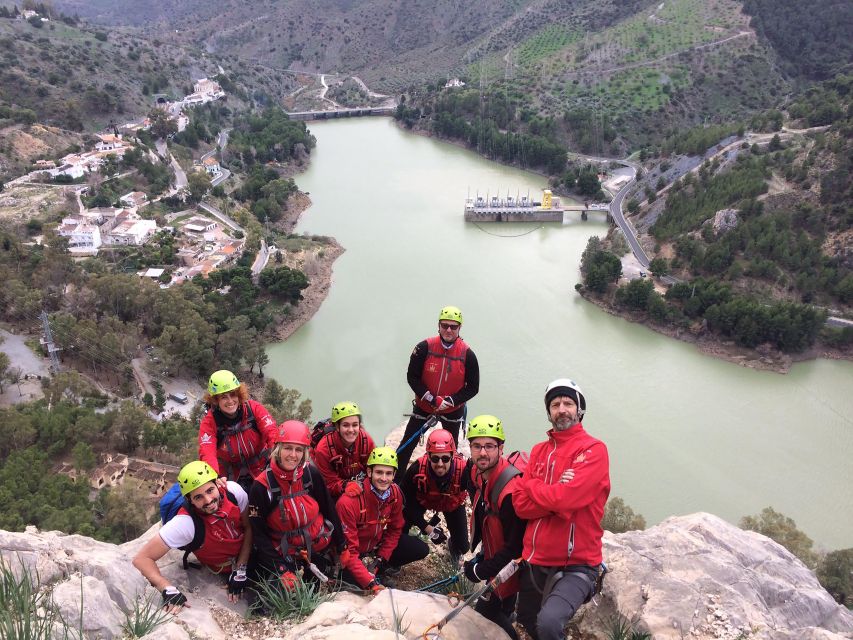
This activity takes place near the southern access area of Caminito del Rey, but it is not the same thing as simply walking the famous suspended footpath. You are signing up for a guided climbing route in a natural setting, with a helmet, harness, gloves, and fixed safety equipment helping you move over rock and between obstacles.
The setting is El Chorro, a small mountain area in Andalusia known for its cliffs, tracks, railway access, and outdoor activities. From the course, you get views toward the village and the train station. Those views matter because they give you a sense of place while you climb, rather than keeping you inside a purpose-built adventure park.
The route rises through a vertical wall at the start. You then cross a rocky section described as a pedrera before following another wall. This opening section sets the tone: you will be using your arms and legs, paying attention to foot placement, and relying on the guides to explain how the harness and protection system work.
You do not need to arrive as a technical climber, but you do need to be comfortable with a real physical challenge. The supplied information does not state a formal fitness level, yet the rock climbing, ascent, bridges, and descent make good mobility essential.
A few more adventure days around Spain worth a look
- Climbing + Zipline + Via Ferrata + Cave. Adventure route in Gran Canaria
★ 5.0 · 149 reviews - Agaete: Gran Canaria Coasteering. Marine Ferrata and Zipline
★ 5.0 · 38 reviews - Gran Canaria: Guided Via Ferrata and Zipline Adventure
★ 4.1 · 36 reviews
The climb: rock, height, and steady progress
The first ascent is likely the most important part of the experience psychologically. A vertical wall can feel intimidating even before you have reached the higher bridges. The advantage of a guided Via Ferrata is that your attention has a practical job: place a foot, hold the cable or handhold, and move to the next point.
This is where the small group size helps. With no more than eight participants, instructors can give more direct support than you might receive on a large commercial outing. Ian and Rachel are specifically praised for being patient and reassuring when someone panics. That is not a minor detail on a route where confidence can change from one section to the next.
The climbing may take you roughly 250 meters upward, based on the experience described by one participant. Treat that figure as a useful sense of scale rather than a promise of an exact measured ascent. Either way, this is much more than a short scramble beside the road.
You will pass through the pedrera and continue along another rock wall before reaching the zip-line. The terrain is natural, so the route will not feel uniform. Some moments demand concentration; others give you a chance to look out toward the surrounding rock and El Chorro.
The 30-meter zip-line
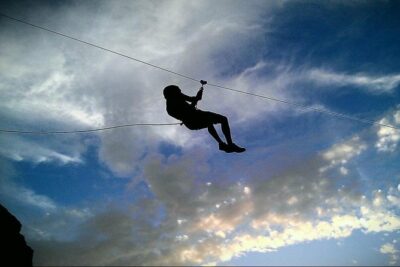
The zip-line is about 30 meters long. It is not the longest zip-line you will find in Spain, but it breaks up the climbing nicely and gives the route a moment of speed.
You reach it after the first wall sections, so you will already have had time to get used to the height and equipment. That can make the zip-line feel like a reward, or it can make it the point where you realize that this activity is higher and more exposed than expected.
You cross using the harness and safety system provided by the guides. The supplied details do not describe the launch platform or landing arrangement, so do not arrive expecting a particular style of zip-line setup. What is clear is that it forms part of the ascent and is followed by more climbing.
I like this kind of variation. A route made entirely of ladders and rock can become tiring, while a zip-line gives you a short, simple movement to enjoy. If you dislike speed or heights, it is worth asking the guides about the exact procedure when you arrive.
Crossing the Tibetan Bridge and monkey bridge
After the zip-line, you continue climbing until you reach the Tibetan Bridge. This is one of the route’s defining moments. A Tibetan Bridge usually requires you to move across suspended cables with open space around you, so balance and composure matter more than speed.
You then continue to a final monkey bridge. The names alone tell you that these are not ordinary footbridges. They are part of the climbing course, and they add exposure as well as a sense of achievement.
The bridges offer some of the best views, but they also make the activity unsuitable for anyone with vertigo. The information specifically excludes people with vertigo, and that warning deserves attention. You do not want to discover halfway across a suspended bridge that height is a serious problem for you.
Your instructors are there to explain the technique and manage the safety equipment. Guides Ian, Rachel, and Liam have all received strong praise for clear explanations, professionalism, patience, and humor. That matters because good guidance can turn a frightening obstacle into a manageable one. It does not remove the height, though.
Same canopy, a different kind of drop:
- Caminito del Rey – Via Ferrata & Zip Line Adventure
★ 5.0 · 26 reviews - Via Ferrata & Zip Line Zafarraya
★ 5.0 · 22 reviews - Toledo Day Trip From Madrid including Zip-line Ticket
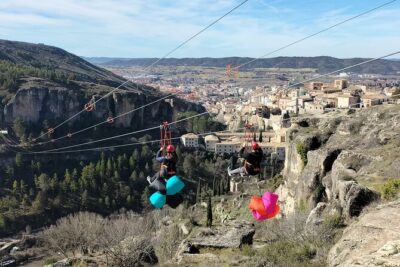
★ 4.0 · 9 reviews - Jumping in Zipline with Unique Views of Cuenca
★ 5.0 · 9 reviews
The descent and your choice of route
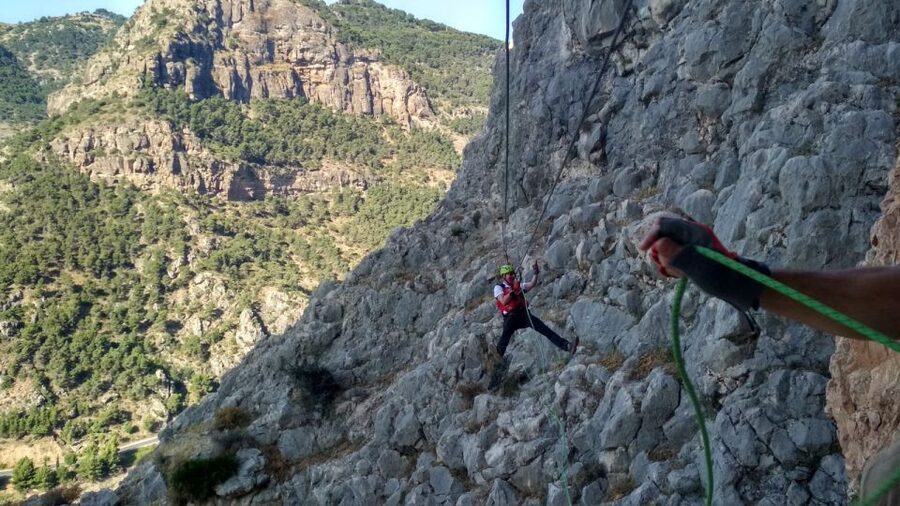
After the final bridge, the activity changes character. Instead of continuing upward, you begin descending with the help of an abseil. Abseiling means lowering yourself down the rock with a rope and harness, under instruction and control.
This first descent is part of the planned route. Later, you can choose how to continue. One option is another rappel. The other is to walk along the Via Ferrata for the remaining descent.
That choice is useful because not everyone enjoys the same kind of challenge. If you have found the rope work exciting, rappelling gives you more of it. If you prefer to keep your feet on the rock and reduce the technical part, the Via Ferrata option may feel more comfortable.
Do not mistake the walking option for an easy stroll. You still need to move over natural terrain and use the fixed route safely. The key benefit is control: you can discuss your preference with the guide rather than being locked into one type of descent.
Once you have completed the descent, you reach the final destination of the route. The entire activity lasts about three hours, but the exact pace will depend on the group, the weather, and how much help participants need at each obstacle.
What the $71 price really covers
At $71 per person, this is priced as a guided technical activity rather than a standard walking tour. The fee includes specialized monitors, a helmet, harness, protective gloves, a 0.5-liter bottle of water, and a cold drink at the end.
That is a fair package if you want instruction and equipment in one booking. You do not need to arrange the basic climbing kit yourself, and a qualified guide is particularly valuable when the route includes a vertical wall, zip-line, suspended bridges, and abseiling.
The price does not include food or transport from your hotel or accommodation. If you are staying in Malaga, you need to plan the journey yourself. The meeting point is at the La Garganta tourist complex, opposite El Chorro train station, in the Caminito del Rey south access area.
From Malaga, the stated driving route uses the A-357 toward Ardales, followed by the M-5403 to El Chorro. You should allow enough time to find the complex and arrive ready for the activity. The tour only operates with at least two participants, so a solo booking may depend on another person joining.
You can reserve now and pay later, and cancellation is free up to 24 hours before the activity for a full refund. Those terms help if your Andalusia plans are still changing, but they do not remove the need to check the weather forecast.
Safety, weather, and insurance limits
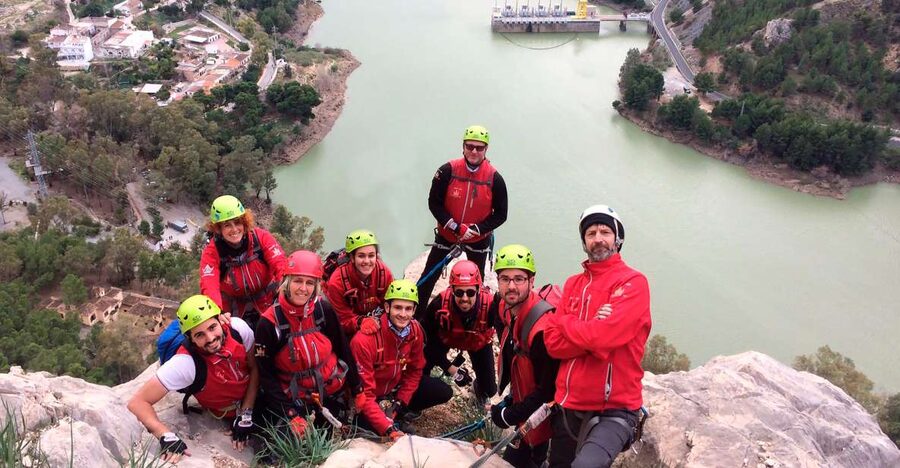
This activity takes place outdoors in a natural area, so it carries genuine risk. The route is not a controlled indoor climbing wall. Rock, exposure, weather, and uneven ground are all part of the setting.
The tour does not run in rain or adverse weather conditions. That is sensible for a route involving rock, bridges, ropes, and height. A dry forecast is important, but conditions can still affect comfort, especially in summer.
The insurance has specific limits. Accident insurance does not cover participants younger than 16 or older than 65. Active tourism accident and civil liability insurance also do not cover medical conditions related to extreme temperatures, including heatstroke and frostbite.
That makes hydration and clothing more than minor details. You receive half a liter of water and a cold drink at the end, but you should still think carefully about heat, sun, and the season. The information does not state that extra water is supplied, so do not assume the included bottle will suit every person or weather condition.
The activity is not suitable for children under 16, pregnant women, people with mobility impairments, people with vertigo, or people over 65. Those limits are not simply formalities. You need to climb, balance, descend, and manage a harness on uneven rock.
What to bring to El Chorro
Bring your passport or ID card, hiking shoes, comfortable clothes, and sports shoes. The footwear wording is slightly broad, but the practical message is straightforward: wear secure shoes with good grip and clothing that allows your legs and arms to move freely.
You receive a helmet, harness, gloves, and water. You do not receive food, so plan to eat before or after the three-hour outing. The available information does not specify changing facilities, storage, or towel arrangements, so keep your personal packing simple and confirm any special needs before setting out.
A light, comfortable outfit will help during the ascent. You should also dress for the season because the insurance specifically excludes some temperature-related medical problems. In hot Andalusian weather, the physical effort may feel much harder than the three-hour duration suggests.
The guide team and the value of patient instruction
The strongest part of this experience is the human support. Ian and Rachel lead many of the sessions, and Liam is also named as a guide. Their work is not just to show you where to go. They explain the route, manage the equipment, and help you continue when fear interrupts your progress.
Several comments about the guides focus on patience, professionalism, kindness, and humor. One participant described being helped through the climb after never expecting to reach the top of a rock wall. Another emphasized that the instructors calmly guide people forward if they panic.
That is exactly the kind of support you want here. A guide cannot make you immune to height, but a calm explanation can help you handle one obstacle at a time. The small group format gives that support a better chance of being personal rather than rushed.
The language options are Spanish and English. If you are more comfortable asking questions in English, you can do so. Before the activity begins, use that opportunity to clarify the route, the safety system, and the descent choices.
Who should book this Via Ferrata
I would recommend this activity to adults and older teenagers who are active, mobile, and curious about climbing but do not want to arrange a full technical expedition. You should be willing to work physically for three hours and accept that bridges, zip-lines, and rappelling are central parts of the day.
It suits you especially well if you want more action than the usual Caminito del Rey visit. The route combines a view of El Chorro with a clear personal challenge. Completing a wall or bridge can give you a strong sense of progress, even if you start out nervous.
I would not choose it for a relaxed family outing, a person with serious fear of heights, or anyone with restricted movement. It is also not a good choice if you want a guaranteed departure regardless of weather.
Should you book the El Chorro Via Ferrata?
Book it if you want a compact, well-supported outdoor challenge with several different obstacles in one route. The $71 fee is reasonable for the guides, technical equipment, water, and final drink, particularly when you value patient instruction and a small group.
Skip it if you mainly want scenery, dislike exposure, or are not comfortable with a vertical ascent and rope descent. For the right person, the best payoff is not just the views over El Chorro. It is reaching the end knowing you handled a climb, a zip-line, two suspended bridges, and an abseil that initially looked more intimidating than manageable.
FAQ
How long does the Caminito del Rey Via Ferrata activity last?
The activity lasts approximately three hours.
Where is the meeting point?
You meet at the La Garganta tourist complex, opposite El Chorro train station, in the Caminito del Rey south access area.
How do I reach the meeting point from Malaga?
The stated driving route from Malaga follows the A-357 to Ardales, then the M-5403 to El Chorro.
What equipment is included?
The activity includes a helmet, harness, protective gloves, a 0.5-liter bottle of water, and a cold drink at the end. Specialized monitors are also included.
Is the activity available in English?
Yes. The instructors speak Spanish and English.
Can I choose how to descend?
Yes. After the initial abseil, you can choose to continue by rappel or walk along the Via Ferrata.
Who cannot take part?
The activity is not suitable for children under 16, pregnant women, people with mobility impairments, people with vertigo, or people over 65. Accident insurance does not cover people younger than 16 or older than 65.
Just added around Spain
- Fly Over Toledo: Urban Zipline over Tagus River★ 5.0 · 7 reviews
- Via Ferrata & Zip Line Zafarraya★ 5.0 · 22 reviews
- Toledo Day Trip From Madrid including Zip-line Ticket★ 4.0 · 9 reviews
- Jumping in Zipline with Unique Views of Cuenca★ 5.0 · 9 reviews
- Salou: Bosc Aventura Salou Zip Lining Experience★ 4.6 · 8 reviews
- Madrid: Zip line circuits high in the trees★ 5.0 · 4 reviews
- Gran Canaria: Zipline and Mountaineering Tour★ 4.8 · 9 reviews
- Elda: El Bolón via ferrata with zipline and abseiling★ 5.0 · 4 reviews
Spain Zipline Tours, compared.
Climbing + Zipline + Via Ferrata + Cave. Adventure route in Gran Canaria
Read our review →
Agaete: Gran Canaria Coasteering. Marine Ferrata and Zipline
Read our review →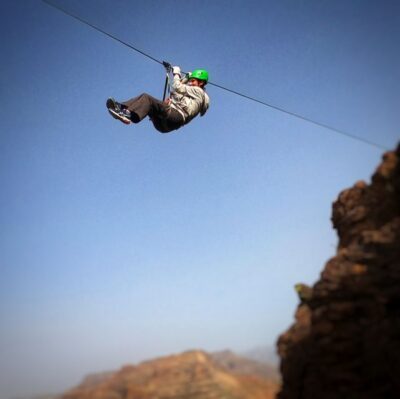
Gran Canaria: Guided Via Ferrata and Zipline Adventure
Read our review →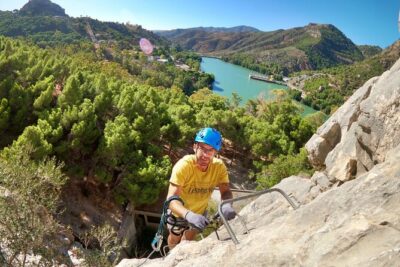
Caminito del Rey – Via Ferrata & Zip Line Adventure
Read our review →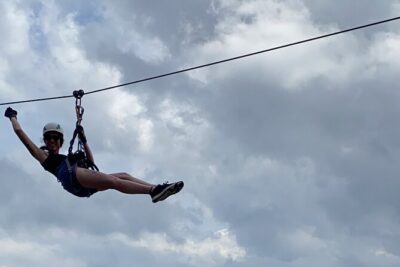
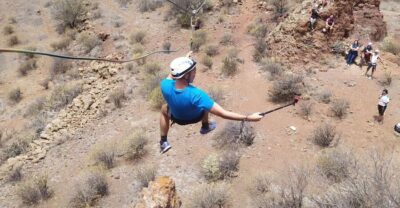

Toledo Day Trip From Madrid including Zip-line Ticket
Read our review →Browse the lists this tour appears in