
Review · CUSCO ZIPLINE TOURS
From Cusco: Via Ferrata and Sky Lodge Zipline
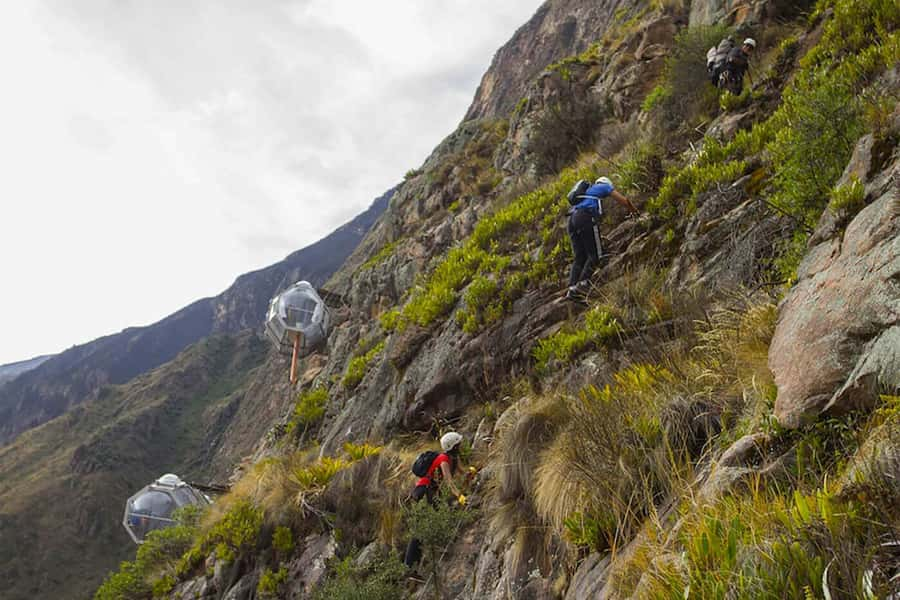
A 300-meter climb up a sheer rock face is the main event here, but the real payoff comes when you stop above the Sacred Valley and look down toward the Vilcanota River. Then you zip from one mountain face to another on six cables, turning a half-day outing into a brisk mountain adventure.
I like the permanent steel steps and safety line, which make the climb possible for beginners, and I like the useful finish in either Cusco or the Sacred Valley. The main drawback is that you spend about two hours in transport and climbing before the zip lines begin, so this is not a gentle sightseeing trip. You need comfortable clothes, steady legs, and a willingness to work for the views.
Key points at a glance
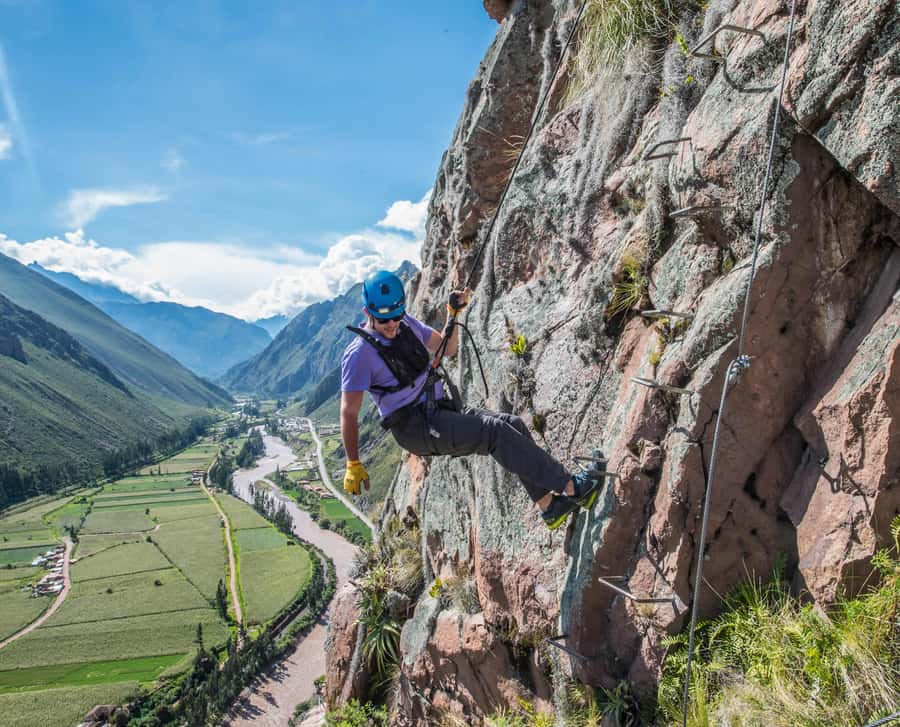
- 300-meter rock climb: A guided via ferrata route takes about one hour and uses fixed metal steps, cables, and a permanent lifeline.
- Six zip lines: Cables range from 250 to 700 meters, with about 2,400 meters of zip-line riding in total.
- High valley views: The top offers broad views of the Sacred Valley and the Vilcanota River.
- Beginner-friendly setup: You do not need expert climbing experience, and professionally trained guides provide the safety equipment.
- Practical transport: Pickup is included from downtown Cusco, with return to Cusco or selected Sacred Valley locations such as Ollantaytambo.
- Simple half-day timing: Pickup is around 8:00 AM, and the full activity lasts about five hours.
The one-hour ride from Cusco
Your morning starts with pickup at your downtown Cusco hotel, usually around 8:00 AM. The drive to the via ferrata base takes about an hour, giving you a chance to watch the city give way to the highland countryside.
That transfer matters when you plan your day. The activity lasts five hours, but it is not five hours of constant climbing and zip lines. You have the ride out, safety preparation, the ascent, lunch, the zip lines, and the return transfer. If you have a train to Machu Picchu later that day, confirm the drop-off timing before booking.
Pickup is included only from downtown Cusco hotels. If you stay outside the central pickup area, the local operator provides a meeting point. That is a small detail, but it can affect your morning plans, especially if you are carrying bags or staying on the edge of the city.
You can also finish in the Sacred Valley instead of returning to Cusco. Ollantaytambo is specifically available as a drop-off point, which can save you from backtracking if you are continuing toward Machu Picchu. You will need to organize your own onward connection, but the route makes sense for an itinerary that moves from Cusco to the valley.
A few more adventure days around Peru worth a look
- Sam’s Zip Line in Sacred Valley
★ 5.0 · 75 reviews - Rafting & Zip line Urubamba River 1 Day
★ 5.0 · 75 reviews - 4-Day Inca Jungle Adventure, Mountain Biking, Rafting and Zipline
★ 5.0 · 60 reviews
Getting fitted for the via ferrata
At the base, you receive a body harness, helmet, gloves, and the fixed safety equipment used for the climb. Your guide explains how the system works before you begin. The route uses metal steps attached to the rock and a permanent lifeline that keeps you connected as you move upward.
That is what makes via ferrata different from ordinary rock climbing. You are not expected to find your own climbing route or manage a complicated rope system. You step from one metal foothold to the next while moving your safety connection along the cable. Still, the route requires physical effort and a head for height.
The operator describes the activity as suitable for beginners and experienced climbers. I would read that as beginner-friendly, not effortless. You need to climb for about an hour and gain 300 meters, often while exposed above the valley. The guide is there to manage safety and pacing, but your arms and legs still do the work.
The safety team is one of the strongest parts of the experience. The guides speak English or Spanish, and the feedback on the guide team is particularly positive. People consistently praise the guides for being experienced, friendly, and reassuring throughout the climb. That matters here because clear instructions can make the difference between enjoying a height-based activity and spending the whole hour tense.
Climbing 300 meters above the Vilcanota River
The ascent is the most demanding section of the day. For roughly one hour, you follow the fixed route up the rock face, using the metal steps and lifeline. You gain height steadily rather than racing to the top, so the climb has a clear physical rhythm.
The best part is the changing view. As you rise, the valley opens below you, and the Vilcanota River becomes part of the scene. You get a perspective that is very different from a roadside viewpoint. The rock face puts you in the middle of the mountain setting, not just looking at it from a distance.
You should also expect moments when the height feels serious. The harness and lifeline provide protection, but they do not remove the sensation of being high above the ground. If you are uneasy with heights, the zip lines may be easier than the climb, or they may not. The activity combines both, so it is wise to choose it only if you are comfortable with that kind of exposure.
The climb ends at the highest point, where you have time for a quick box lunch. This is a practical meal rather than a long restaurant stop. Use the break to drink water, catch your breath, and take in the view before the next part begins.
A box lunch with Sacred Valley views
The lunch stop gives the morning some breathing room. You are above the valley, with views toward the Vilcanota River and the surrounding mountains. After an hour of climbing, even a quick meal feels well timed.
Do not expect a leisurely picnic or a large dining service. The food is a box lunch, and the stop is part of an active excursion. Bring water of your own as well, since water is listed among the recommended items and the climb can leave you thirsty.
This is also the best point for photographs, but keep your daypack and loose items secure. You will soon be attaching yourself to zip lines, so anything you carry needs to be manageable and safely stored according to the guide’s instructions. The supplied information does not specify storage arrangements, so ask at the base before you begin.
Same canopy, a different kind of drop:
- Cusco Rafting and Zipline Adventure
★ 4.5 · 47 reviews - 07 Day: Inca Jungle Adventure with Mountain Bike, Rafting, Zipline & Trek
★ 5.0 · 36 reviews - Zipline over the Sacred Valley Trip
★ 5.0 · 11 reviews - Canopy Tower, Zipline, Kayak, and Monkey Island …
★ 3.6 · 11 reviews
Six zip lines back across the mountains
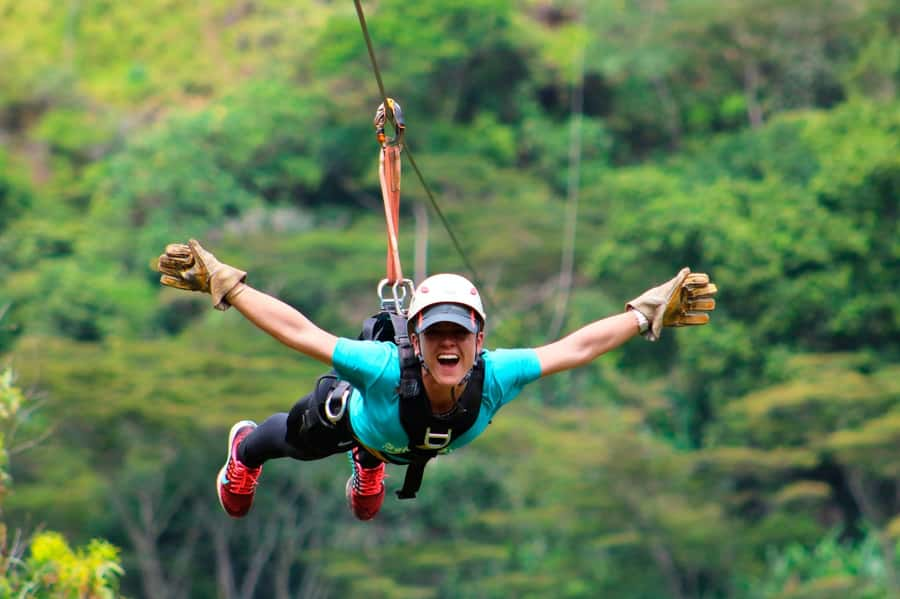
After lunch, you prepare for six zip-line cables. They range from 250 to 700 meters long, with up to 2,400 meters of zip-line riding in total. The route crosses from one mountain face to another, then descends in a zigzag pattern for more than 300 meters.
The length of the cables gives this section variety. A 250-meter line is a quick burst, while a 700-meter line gives you more time suspended above the valley. You are attached to the system with the supplied harness and safety equipment, and the guides direct you through the changeovers.
This is where the trip shifts from steady physical effort to pure motion. On the climb, you concentrate on each step. On the cables, you are hanging in the air and watching the rock, valley, and river shift around you. The combination keeps the outing from feeling repetitive.
The zip lines end at the base, so you do not need to climb back down the rock face. That is a sensible route design. You get the demanding ascent and the fast descent without repeating the same terrain. The zigzag pattern also lets you cross between mountain faces rather than simply sliding straight down one slope.
What the $167 price includes
At $167 per person, this is not a low-cost half-day activity. The value depends on how much you want a guided adventure rather than a simple valley outing.
The price includes downtown Cusco pickup, round-trip transport, certified safety equipment, an English or Spanish-speaking guide, and a box lunch. It also includes the via ferrata setup and zip-line equipment. You are paying for a complete organized activity, not just access to a cable or climbing route.
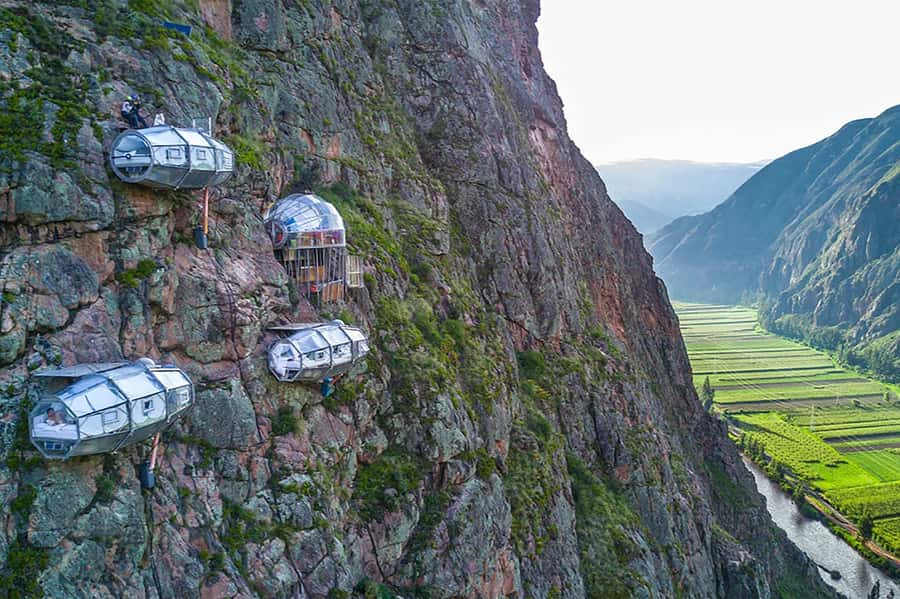
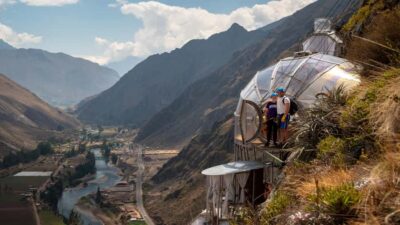
The transport adds useful value if you are staying in central Cusco and do not want to arrange a separate vehicle. The possible drop-off in Ollantaytambo adds even more value for a route that continues toward Machu Picchu. On the other hand, the price does not include a stay in the Sky Lodge. The name can cause confusion, so be clear: this is a via ferrata and zip-line experience, not an overnight stay in a transparent cliff pod.
For someone who wants mountain scenery plus a serious burst of activity, the cost is easier to justify. If you mainly want views of the Sacred Valley, a quieter scenic excursion will give you more time for less physical effort.
Who will enjoy this best
I would recommend this outing to active visitors who want to break up a Cusco sightseeing schedule with something hands-on. It suits couples, friends, and families with older children who are comfortable with heights and physical activity.
Children must be at least eight years old. The data does not provide a maximum age or a detailed fitness standard, so adults should judge their own mobility honestly. You should be able to climb for about an hour, wear a harness comfortably, and manage the movement required by the fixed steps.
Experienced climbers may find the via ferrata less technical than a full climbing route. That is not a weakness. The appeal here is access. You can get a high mountain experience without bringing climbing equipment or having advanced climbing training.
This is less suitable for anyone seeking a relaxed morning, a long cultural visit, or a quiet valley viewpoint. It also may not suit you if heights cause major anxiety. The guides can support and instruct you, but the activity still puts you on a rock face and six suspended cables.
What to wear and bring
Keep your clothing practical. Comfortable clothes, comfortable shoes, a windbreaker, water, and a daypack are the key items. Rubber-soled or hiking shoes are recommended, and they are a much better choice than sandals or smooth casual shoes.
A windbreaker is useful because the weather can feel different at the exposed climbing and zip-line sections than it does in the city or vehicle. Avoid bulky clothing that interferes with the harness.
Bring only what you need for five hours. A small daypack is easier to manage than a large bag, especially when moving between the metal steps and the cables. You will need to provide every participant’s full name, passport number, and birthday when booking, so keep those details available.
Safety, guides, and the overall feel
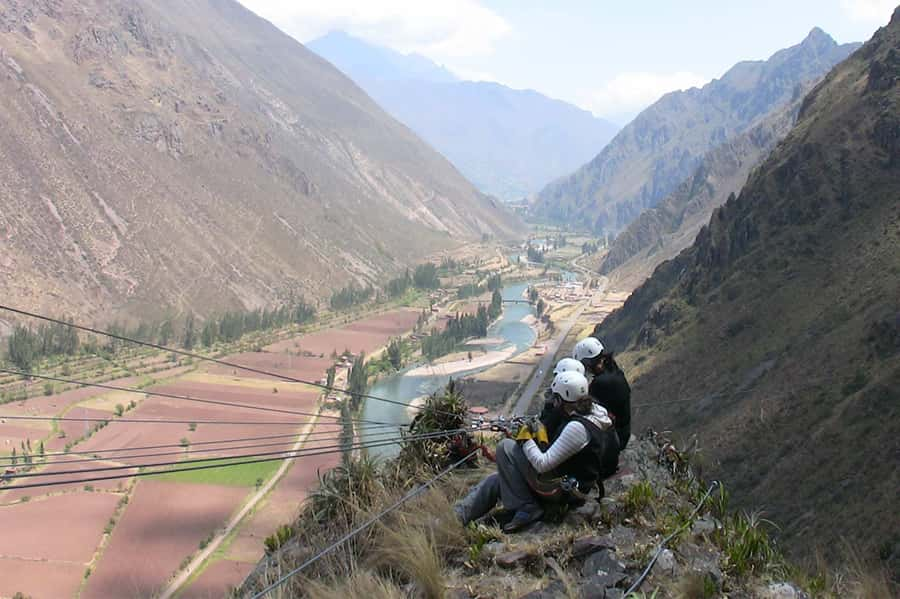
All guides are professionally trained, and the activity includes a full safety setup with harness, helmet, gloves, zip-line equipment, and the permanent via ferrata lifeline. The strongest praise centers on the guide team. The guides are described as excellent, experienced, fun, and able to make people feel safe throughout the route.
That combination is important. A guide who only gives technical instructions is not enough for a height-based activity. You also need someone who keeps the group moving, explains what comes next, and helps you stay calm when the rock face or cable feels intimidating.
The activity has a perfect 5.0 rating from 16 reviews, with especially strong comments about the guides, the fun factor, and the view from the top. A small sample is not proof that every departure will be identical, but it does point to the parts of the day that consistently matter most: professional support and the high valley viewpoint.
Booking and timing advice
You can cancel up to 24 hours before the activity for a full refund, and the reserve-now, pay-later option gives you some flexibility while your Cusco plans settle. Starting times depend on availability, though pickup is generally around 8:00 AM.
Give yourself a clear plan for the afternoon. The activity is listed as five hours, but road conditions and the return transfer can affect exact timing. If you plan to continue to Ollantaytambo or connect with Machu Picchu, confirm the drop-off arrangement and allow room for delays.
The activity provider needs full participant details at booking. That includes names, passport numbers, and birthdays. It is a routine requirement, but entering the information carefully avoids trouble on the day.
Should you book this Cusco adventure?
Book it if you want an active Sacred Valley experience with a clear mix of climbing, views, and speed. The permanent safety system makes the via ferrata accessible to beginners, while the six zip lines give experienced adventurers enough movement and height to keep the day exciting.
I would be more cautious if you dislike heights, have limited mobility, or want a slow scenic outing. The 300-meter ascent is real exercise, and the return ride can take up a good part of the morning and early afternoon.
For the right person, $167 buys more than a zip line. You get transport, equipment, trained guides, lunch, a high viewpoint over the Vilcanota River, and a useful Sacred Valley drop-off option. Pack light, wear proper shoes, and choose this only if the climb sounds as appealing to you as the flight.
FAQ
How long does the Cusco via ferrata and zipline experience last?
The activity lasts about five hours, including transportation, the climb, lunch, the zip lines, and the return transfer.
What time does hotel pickup usually begin?
Pickup is usually around 8:00 AM from hotels in downtown Cusco.
Is hotel pickup included?
Yes. Pickup from downtown Cusco and round-trip transportation are included. If your hotel is outside downtown, the local supplier provides a meeting point.
How high is the via ferrata climb?
The via ferrata route climbs 300 meters up a rock face.
How long does the climb take?
The ascent takes about one hour.
How many zip lines are included?
The experience includes six zip-line cables.
How long are the zip lines?
The cables range from 250 to 700 meters long, with up to 2,400 meters of zip-line riding in total.
Is the activity suitable for beginners?
Yes. The activity is described as suitable for beginners and expert climbers. Professionally trained guides provide instruction and safety equipment.
What is the minimum age?
Children must be at least eight years old to participate.
Is a Sky Lodge overnight stay included?
No. The price includes the via ferrata and zip-line activity, but not a stay in the Sky Lodge.
Just added around Peru
- Zipline over the Sacred Valley Trip★ 5.0 · 11 reviews
- 07 Day: Inca Jungle Adventure with Mountain Bike, Rafting, Zipline & Trek★ 5.0 · 36 reviews
- Puerto Maldonado: Jungle Adventure |Zipline + Canopy + Kayak★ 3.2 · 5 reviews
- Tambopata: Zipline Adventure & Kayak to Monkey Island★ 3.9 · 7 reviews
- From Cusco: Via Ferrata & Zip Line with lunch★ 5.0 · 5 reviews
- From Cusco: Half-Day Zip Line Adventure★ 4.8 · 3 reviews
- Cusco: Rafting in Cusipata + Zipline over South Valley★ 5.0 · 2 reviews
- Cusco: Zipline + ATV’s | Salt Mines of Maras and Moray |★ 5.0 · 4 reviews
Cusco Zipline Tours, compared.
4-Day Inca Jungle Adventure, Mountain Biking, Rafting and Zipline
Read our review →
07 Day: Inca Jungle Adventure with Mountain Bike, Rafting, Zipline & Trek
Read our review →
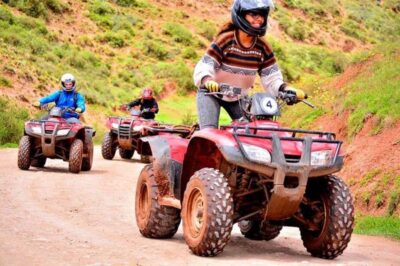
Zipline + ATV’s | Salt Mines of Maras and Moray |
Read our review →Browse the lists this tour appears in