
Review · NEW ZEALAND ZIPLINE TOURS
Rotorua Ziplines – Okere Falls Experience
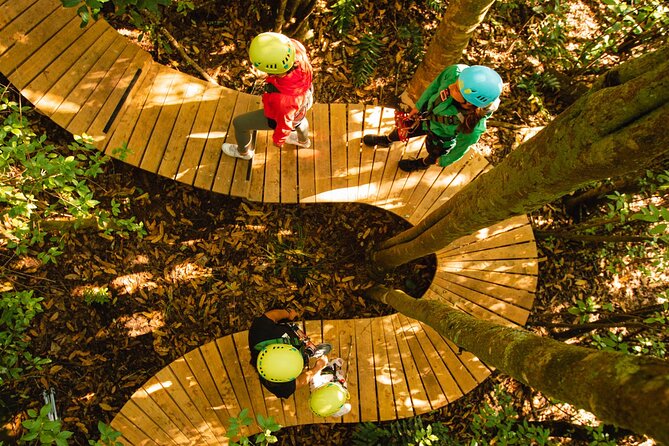
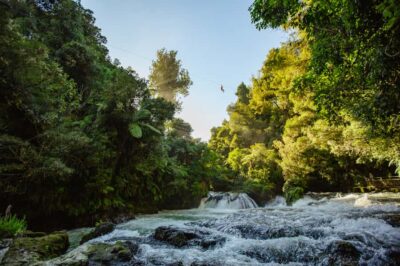
Rotorua Ziplines takes you above the Kaituna River and Okere Falls, where the river’s white water, native trees, and three waterfalls provide the setting. This is not just a ride from one platform to another. You’ll cross swing bridges, walk forest boardwalks, and hear stories about the land along the way.
I like the way the trip combines properly managed adventure with a real sense of place. I also like the conservation element: you help support native forest regeneration, then plant a tree in your name before leaving. The main thing to consider is that ziplining involves heights, uneven ground, and a 130kg weight limit, so it is not a casual sightseeing stop for everyone.
Key points to know before you book
- Three waterfalls and the Kaituna River: You zip above some of the most striking scenery around Okere Falls.
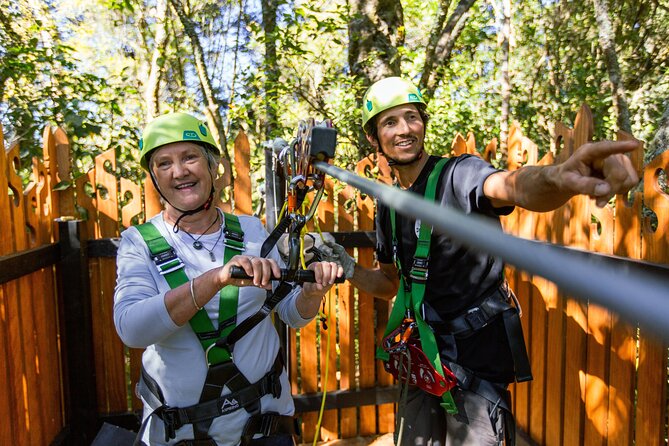
- Two local guides: The guides handle the safety briefing, equipment, forest interpretation, and Māori stories.
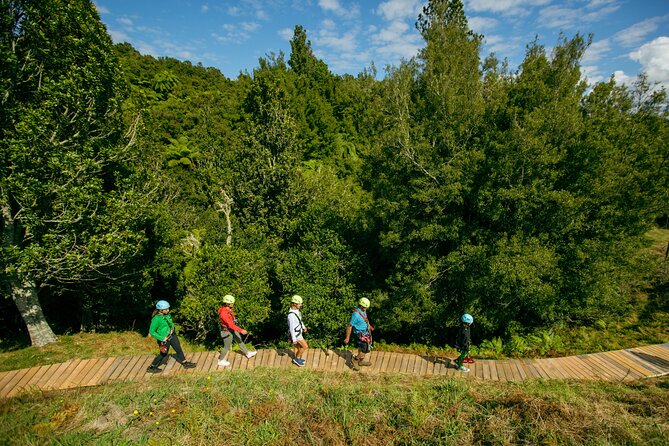
- A gentle walking component: Expect about 600 metres on boardwalks and forest paths, with swing bridges along the way.
- A cultural and conservation focus: You’ll try ancient Māori teas, learn about the mauri, or spirit, of the area, and plant a native tree.
- Small groups: A maximum of 10 people keeps the experience personal and makes it easier to get guide support.
- Good for first-timers: The equipment and briefing are designed to help nervous beginners get comfortable, though the activity still involves height and exposure.
Flying above the Kaituna River at Okere Falls
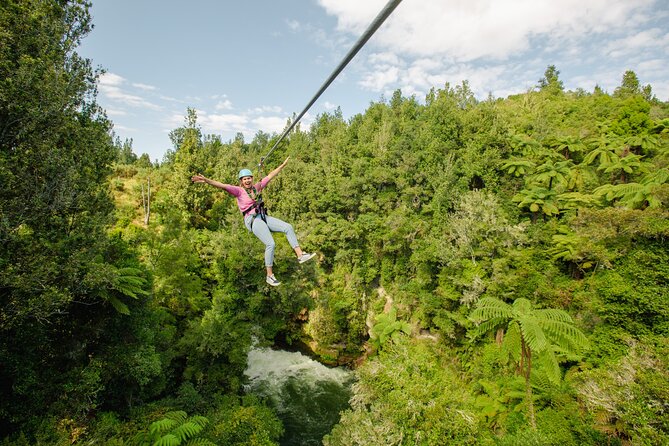
The setting does much of the work here. Okere Falls is known for the Kaituna River and its rapids, and from the zipline course you see the river from a viewpoint that a walking track alone cannot provide. The water can look calm from the forest, then suddenly show its force as it runs through the falls and rapids below.
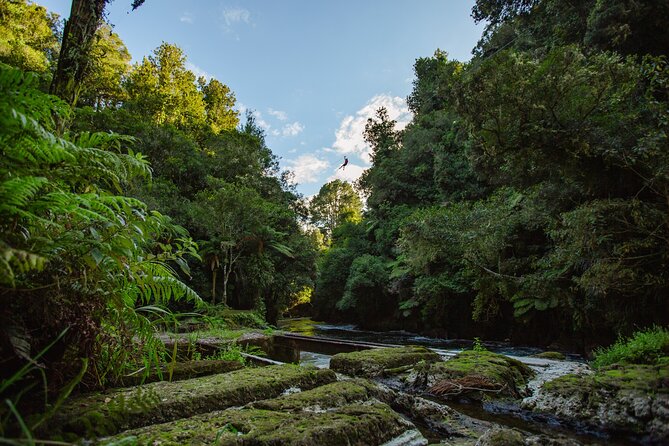
The main attraction is not one giant leap. It is the changing view as you move through the course. One line may carry you over forest canopy, while another gives you a clear look at a waterfall or the river corridor. The chance to cross above three waterfalls gives the trip more variety than a basic zipline circuit.
I’d keep your eyes open during each ride. The temptation is to focus only on landing correctly, especially if this is your first time. But the best moments come when you look down and around you, taking in the trees, rushing water, and rock formations.
The trip lasts about two and a half hours, so you get time to settle into the equipment and enjoy the setting. It is long enough to feel like a proper half-day activity, but short enough to fit beside other Rotorua plans.
More Waterfall Zipline Tours in New Zealand:
- Okere Falls: Zipline over Waterfalls Experience
★ 4.9 · 187 reviews - Niagara Falls, Canada: Zipline to The Falls
★ 4.5 · 2,236 reviews - Outdoor Ziplining, Waterfalls & Speed boat in Puerto Vallarta
★ 5.0 · 1,796 reviews
What happens at the Okere Falls meeting point
The experience begins at 761 State Highway 33, Okere Falls 3074. It ends at the same meeting point, which makes planning easier if you are driving yourself.
After arrival, you’ll be prepared with the required gear and given a safety briefing. The safety talk matters here. Ziplining is an adventure sport, and the risks include slips, trips, and exposure to heights. Rotorua Ziplines operates under New Zealand’s Adventure Activity Regulations, but no safety system removes every risk.
Your guides will show you how to use the equipment and explain what to do on the course. Pay attention even if you have zipped before. Each operation has its own procedures, and following the guides’ instructions helps the group move smoothly.
The small group limit is a real advantage. With no more than 10 people, two guides can keep an eye on the group and offer help without shouting across a large crowd. This is especially useful if your party includes a first-timer or someone who feels uneasy around heights.
Guide teams vary. Names praised by past participants include Meg and Maria, Johnny, Ruby and Elle, Lexi and Luther, Alina and Ethan, Nui, Ben, Josh, Elyse, Rafi, Bella, and others. The repeated pattern is clear: the guides are expected to handle nerves as well as the technical side of the course. Their role includes sharing information about the forest, local wildlife, the falls, and Māori connections to the area.
The zipline course, swing bridges, and forest paths
Once you are geared up, the activity moves between zipline platforms, swing bridges, and boardwalks. The walking is described as about 600 metres and easy, so this is not a strenuous bush hike. Still, it is not a fully seated activity. You’ll be on your feet, moving through a forest setting, and dealing with the ordinary unevenness that comes with an outdoor course.
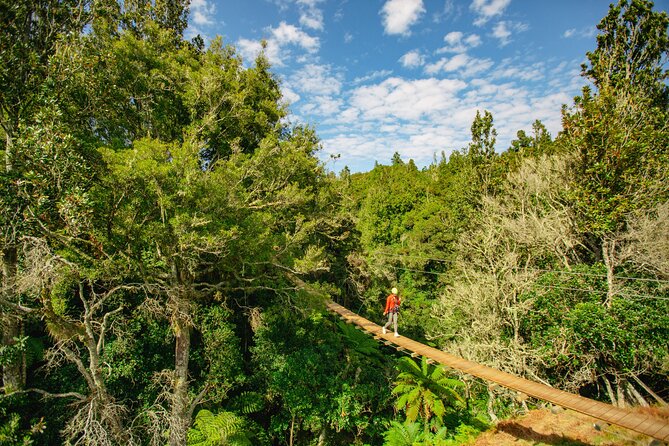
The swing bridges add a different kind of movement. A zipline gives you a quick flight, while a bridge asks you to place each foot carefully as it moves beneath you. For some people, the bridges may feel more nerve-racking than the lines. For others, they are simply a fun break between rides.
The boardwalks bring you closer to the forest. This is where the trip feels less like an amusement ride and more like an outdoor visit with an adventure built into it. The guides can point out native plants and explain how the area is being restored.
The course is designed for beginners as well as people with previous zipline experience. Several first-time participants found the activity easy to manage after the briefing, and families with children aged 12 and 17 were able to enjoy it with guide support. That does not mean you should ignore your nerves. Tell the guides if you are anxious, and use their instructions rather than trying to rush through.
Three waterfalls from a very different angle
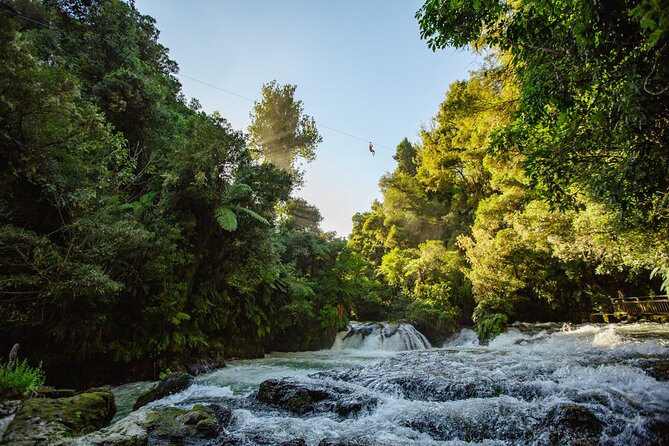
The waterfalls are one of the strongest reasons to choose this particular course. You are not simply flying over generic bush. The lines pass above or near three waterfalls, giving you a high view of the water cutting through the forest.
From the ground, a waterfall usually presents itself as a single view. From above, you notice how the river approaches it, how the banks are covered in trees, and how the water continues downstream. That wider view makes the experience feel connected to the river rather than built beside it.
The Kaituna River is also a working part of the scene, not just a pretty backdrop. Its rapids can be forceful, and seeing the water below adds energy to the ride. On a day when the river is running strongly, the sound and movement may be as memorable as the zip itself.
Weather will affect the mood of the visit. In clear conditions, you’ll get stronger views into the forest and across the water. The activity requires good weather, and poor conditions can lead to a cancellation, a new date, or a full refund. That policy is sensible for an outdoor course involving height, bridges, and wet forest surfaces.
A few more adventure days around New Zealand worth a look
- Rotorua Canopy Tours: 2.5Hour Native Forest Zipline Adventure
★ 5.0 · 4,563 reviews - Rotorua’s Ultimate Zipline: 6 ziplines, 400 m Tandem, Cliff Walk
★ 5.0 · 2,557 reviews - Small-Group Zipline Adventure in Queenstown
★ 5.0 · 933 reviews - Waiheke Island: Zipline and Native Forest Adventure Trip
★ 4.9 · 695 reviews
Māori stories, ancient tea, and the mauri of the place
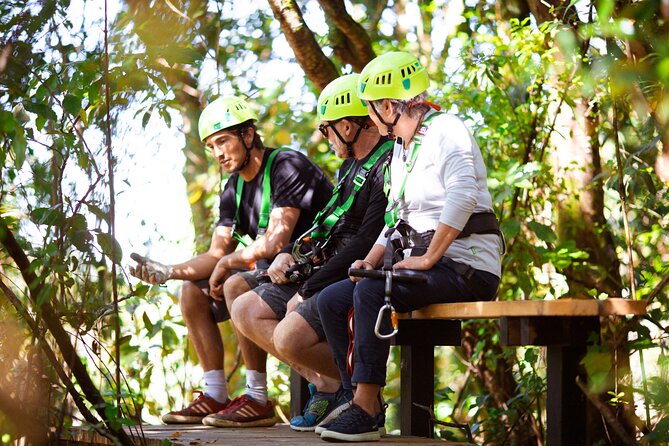
The cultural side gives this activity more substance than a simple sequence of rides. Rotorua Ziplines operates in partnership with the local Māori tribe Ngāti Hinerangi, and the guides share local history and stories connected with the falls and forest.
You’ll hear about the mauri, the spirit or life force of the area. This idea changes how you look at the forest. The trees and river are not treated as scenery placed around an attraction. They are part of a living place with cultural meaning and responsibilities attached to it.
You’ll also try ancient Māori teas. This is a small part of the trip, but it gives the walking sections a pause and adds a sensory link to the forest. The tea stop is also useful if you need a moment to settle after the more active parts of the course.
Guide quality matters greatly here. The best moments are not only the fast ones. Guides such as Josh and Ethan have been praised for explaining local plants, animals, and history in a way that adds value without turning the trip into a lecture. You should expect the information to vary slightly with the guide team, but local interpretation is built into the experience.
Conservation that you can see and take part in
The conservation work is a strong feature because it is tied directly to your visit. The operation supports the regeneration of native forest, and at the end you plant a tree in your name.
That gives the activity a practical purpose beyond entertainment. You still get the adrenaline of the zipline, but part of your booking helps restore the environment around the course. The planting also gives you a clear final moment rather than ending abruptly after the last ride.
I would not choose the tour solely because of the tree planting. The main value is still the course, the scenery, and the guiding. But if you are comparing several adventure activities around Rotorua, this conservation element is a meaningful extra.
It also fits the cultural message of the trip. Learning about the mauri of the area and then taking part in forest regeneration makes the visit feel more connected to the place. You are not only passing through the bush for a few photographs.
Is $104.88 good value for two and a half hours?
At $104.88 per person, this is not the cheapest way to spend a morning or afternoon in Rotorua. You are paying for specialist equipment, safety systems, two guides, a small group, forest access, the zipline course, and the cultural and conservation elements.
The value improves if you want several experiences in one outing. You get aerial views, waterfalls, river scenery, forest walking, swing bridges, Māori stories, tea, and tree planting. A shorter zipline ride with little interpretation might cost less, but it would not offer the same mix.
The duration also matters. Two and a half hours gives you more than a quick thrill ride. You have time for the safety briefing, movement between platforms, the walks, guide explanations, and the tea stop. If you are filling a full day with Rotorua attractions, this fits as a substantial activity rather than a brief add-on.
For a family or small group, the personal attention can make the price easier to justify. First-timers often need reassurance and clear instruction, and a maximum of 10 people helps the guides provide it. Experienced zipliners may find the value rests more on the forest setting, waterfalls, and cultural information than on technical difficulty.
Who will enjoy this most?
This is a strong choice for you if you want adventure without committing to a full-day expedition. It suits adults, families, and beginners who are willing to try a height-based activity. The combination of easy walking and short flights makes it more approachable than a demanding outdoor tour.
It may also suit you if you like activities with a local connection. The Ngāti Hinerangi partnership, Māori stories, ancient teas, and discussion of the mauri give the outing a clear sense of place.
You should think carefully before booking if you have a serious fear of heights, trouble walking on outdoor paths, or a medical condition that could affect participation. The provider asks you to share medical concerns beforehand. There is also a 130kg maximum weight limit, which applies to participation.
The course includes exposure to heights, bridges, and forest paths. Several first-time participants found that the guides helped them manage their nerves, but reassurance is not the same as removing the challenge. You still need to be comfortable following instructions and moving through an outdoor adventure course.
Practical details that make the day easier
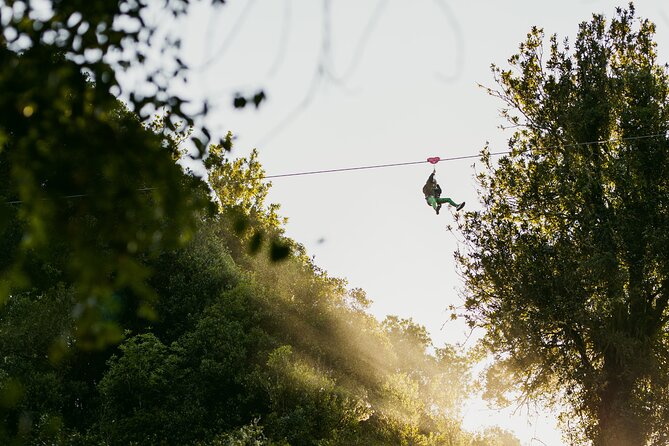
Allow the full two and a half hours, not just the time spent on the lines. The briefing, gearing up, walking, guide talks, tea, and tree planting are all part of the outing.
Wear something suitable for easy walking and outdoor activity. The supplied information does not specify a required clothing list, so avoid assuming that every weather condition will feel comfortable. Check conditions before you go, especially because the trip can be canceled in poor weather.
The activity is mobile-ticket friendly, and booking confirmation is received at the time of booking. If your plans change, you can cancel for a full refund up to 24 hours before the start time. Cancellations inside that window are not refunded, and late changes are not accepted.
The experience needs a minimum number of participants. If the provider cancels for that reason, you can choose another date or experience, or receive a full refund. The same options apply if bad weather forces cancellation.
Should you book Rotorua Ziplines?
I would book this if you want more than a standard zipline ride. The combination of the Kaituna River, three waterfalls, native forest, local guiding, Māori interpretation, and tree planting gives the outing a clear identity.
It is especially appealing for first-timers and families because the groups are small and the guides focus strongly on safety and confidence. Experienced participants should book for the setting and cultural content, not because the course is presented as an extreme test.
Skip it if heights are a firm no, if you cannot meet the 130kg limit, or if you want a quiet forest walk without harnesses and bridges. For everyone else, this is a well-rounded Rotorua activity that gives you a memorable view of Okere Falls and a useful reason to care about the forest below.
FAQ
Where does the Rotorua Ziplines experience start?
It starts at 761 State Highway 33, Okere Falls 3074, New Zealand.
Where does the activity finish?
The experience finishes back at the meeting point.
How long does the zipline experience last?
The activity lasts approximately two hours and 30 minutes.
How much walking is involved?
You can expect about 600 metres of easy walking during the experience.
What is the maximum group size?
The activity has a maximum of 10 participants.
Is there a weight limit?
Yes. The maximum weight limit is 130kg.
Can beginners take part?
Yes. Most people can participate, and the guides provide equipment, safety instructions, and support. The activity still involves heights, slips, trips, and outdoor walking.
What happens if the weather is poor?
The experience requires good weather. If it is canceled because of poor conditions, you can choose another date or receive a full refund.
How far in advance can I cancel for a full refund?
You can cancel at least 24 hours before the experience start time for a full refund. Cancellations or changes made less than 24 hours before the start time are not accepted for a refund.
Just added around New Zealand
- Nature at its best Lake Tarawera Treetop Walk and Forest Spas★ 5.0 · 2 reviews
- West Coast Tower Zipline & Treetop Walk Combo★ 4.5 · 19 reviews
- Christchurch Long Ride Zipline★ 5.0 · 8 reviews
- The Ultimate Canopy Zipline Experience Private Tour From Auckland★ 5.0 · 8 reviews
- Hokitika: West Coast Treetop Walkway Entrance Ticket★ 4.5 · 82 reviews
- Hokitika: West Coast Tree Top Tower Zip Line and Walk★ 4.2 · 55 reviews
- Coromandel: Guided Zipline Tour Experience★ 4.9 · 62 reviews
- Rotorua: 6 Ziplines, 400m Tandem, Cliff Walk & Swing Bridges★ 4.9 · 93 reviews
New Zealand Zipline Tours, compared.
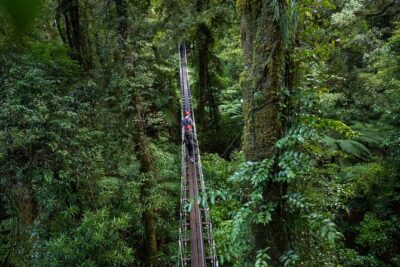
Rotorua Canopy Tours: 2.5Hour Native Forest Zipline Adventure
Read our review →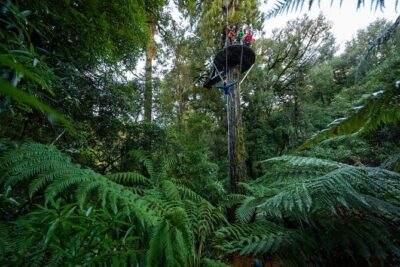
Rotorua’s Ultimate Zipline: 6 ziplines, 400 m Tandem, Cliff Walk
Read our review →
Waiheke Island: Zipline and Native Forest Adventure Trip
Read our review →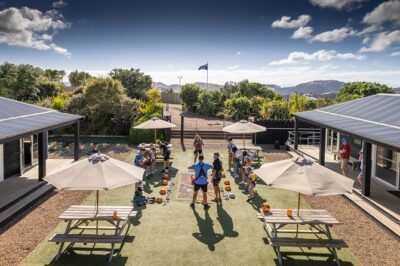
6 Ziplines, Swing-Bridges & Wildlife Encounters
Read our review →
Okere Falls: Zipline over Waterfalls Experience
Read our review →Browse the lists this tour appears in