
Review · SPAIN ZIPLINE TOURS
Agaete: Gran Canaria Coasteering. Marine Ferrata and Zipline
The big draw here is a 35-meter zipline above the Atlantic, reached by hiking, abseiling, and climbing a marine Via Ferrata. You work your way down Agaete’s cliffs, cross rock above the water, then fly back toward the great Atlantic wall before climbing to a viewpoint 125 meters above sea level.
I like the mix of local volcanic and aboriginal history with real adventure, and I like that guide Pablo keeps the group small, explains each technique, and uses a professional safety rope during the abseil. The main catch is simple: this is a hard, height-heavy outing, not a gentle coastal walk. A few hours of physical effort, exposure, and nerves are part of the deal.
Key points to know before booking
- A 35-meter zipline crosses above the sea, making this one of Gran Canaria’s more unusual adventure outings.
- The route begins with hiking and an abseil, so the most demanding work starts before you reach the coast.
- A marine Via Ferrata follows the shoreline, including a chain-assisted section above the water.
- Snorkeling offers a calmer change of pace after the cliff and climbing sections, when sea conditions allow.
- Groups are limited to eight people, with English or Spanish instruction from a professional guide.
- Good fitness and a head for heights are required, and the provider lists the activity as unsuitable for non-swimmers, people over 110 kilograms, and anyone over 55.
What this Agaete coasteering route really involves
Coasteering means moving along the edge of the sea using several skills rather than simply walking beside it. Here, that means hiking, rope work, climbing, a zipline, and snorkeling in one five-hour outing.
At $81 per person, the price is reasonable if you want a full half-day of guided activity. Your fee covers the guide, insurance, harness, helmet, wetsuit, snorkel equipment, snacks, and photos. You are paying for instruction and safety gear as much as for the scenery.
I would not compare this with a standard boat trip or a short zipline visit. You get a much more active experience, but you also need to bring the right attitude. The equipment helps, and the guide controls the technical sections, but you still need to walk, climb, swim, balance, and manage your own nerves.
The trip begins at the parking area near the roundabout at Playa de Caleta in Agaete. There is no hotel pickup or drop-off, so you need to make your own way there. Plan extra time to arrive with water, sports shoes, swimwear, sunscreen, a towel, and a light jacket.
A few more adventure days around Spain worth a look
- Climbing + Zipline + Via Ferrata + Cave. Adventure route in Gran Canaria
★ 5.0 · 149 reviews - Gran Canaria: Guided Via Ferrata and Zipline Adventure
★ 4.1 · 36 reviews - Caminito del Rey – Via Ferrata & Zip Line Adventure
★ 5.0 · 26 reviews
Hiking toward the aboriginal cave
The first stage is a hike along the cliff. This gives you time to warm up and lets the guide explain the area before the ropes appear.
One especially useful feature is the visit to an ancient aboriginal cave. The guide explains its connection to Gran Canaria’s first inhabitants and the meaning of the surrounding area. This keeps the outing from feeling like a string of unrelated stunts. You begin to understand the rock as part of the island’s volcanic past and human story, not just as a platform for adventure sports.
The walking section also gives you an early look at the route below. You can see the coastline, the rock formation used later in the activity, Agaete, and a secluded beach. I like this order because you get the big picture before committing to the abseil.
Do not treat the hike as a casual stroll. The provider describes the first part as hiking and abseiling, and the walk leads to a high point before dropping toward sea level. Wear proper hiking boots or sturdy sports shoes. Shorts are specifically discouraged because the rocks can scratch your legs.
A breathable sports outfit works best. Tight clothes are acceptable, and practical clothing matters because there is limited room in the dry bags. You should not arrive with a large beach bag or bulky change of clothes.
Abseiling from the cliff to the coast
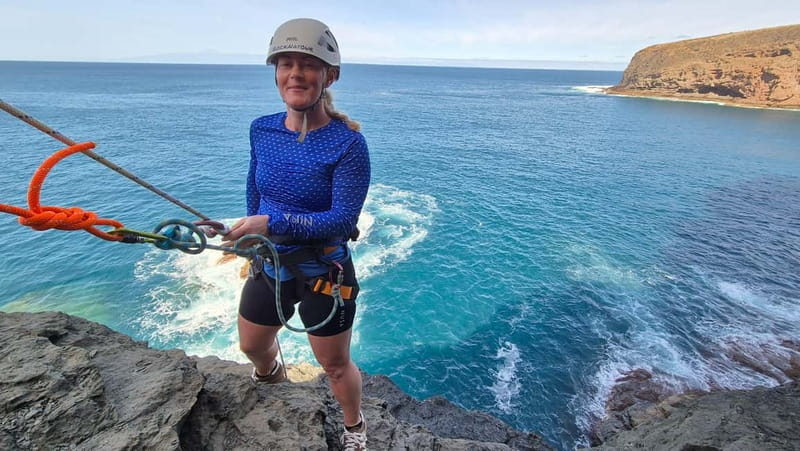
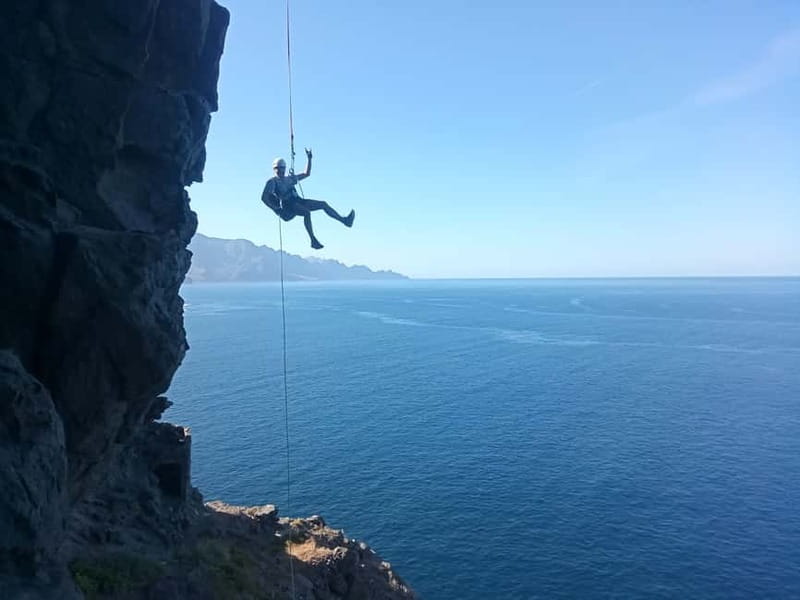
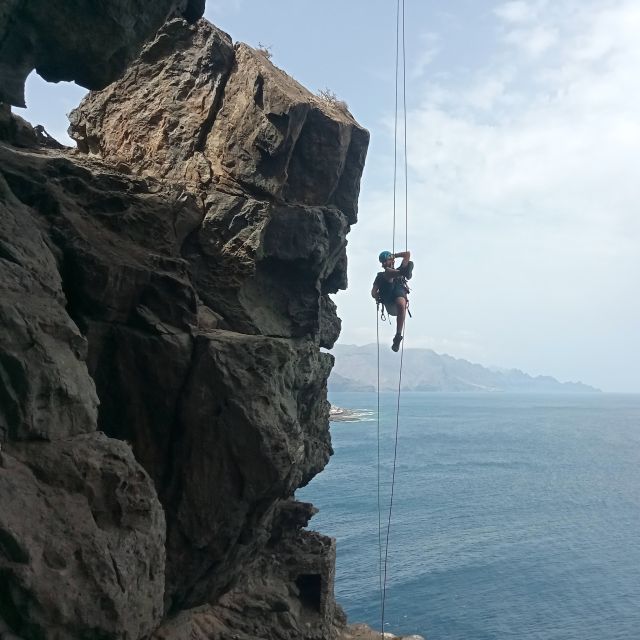
From the high point, you descend by rope toward the shoreline. This is the first major test of confidence.
You do not need to arrive as an expert climber. The guide teaches the techniques and supplies the harness, helmet, and ropes. During the abseil, you are also belayed by a professional mountain guide with a safety rope. That extra protection matters, especially if your main challenge is fear rather than strength.
Still, do not mistake instruction for an easy ride. You control your feet and body while moving down the rock, and the height can feel serious. One person described being worried at the start but later calling the activity the best thing they had done. That is a fair picture of the experience: the equipment reduces the objective risk, but it does not remove the sensation of looking down from a cliff.
I would book this only if you can accept a little discomfort and follow directions carefully. People with vertigo, a fear of heights, back problems, mobility limitations, or low fitness are advised not to take part. If you have previous rock-climbing experience, you may feel more at ease, but it is not listed as a requirement.
The marine Via Ferrata and chain pass
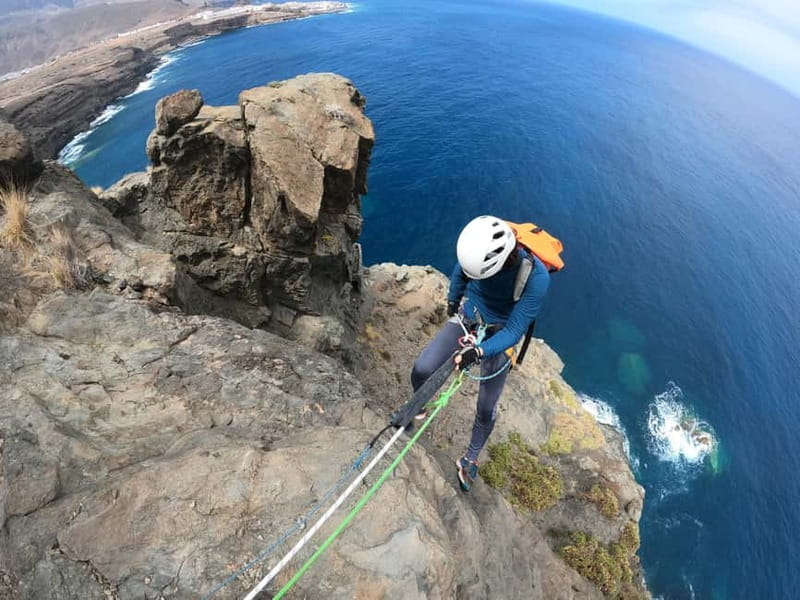
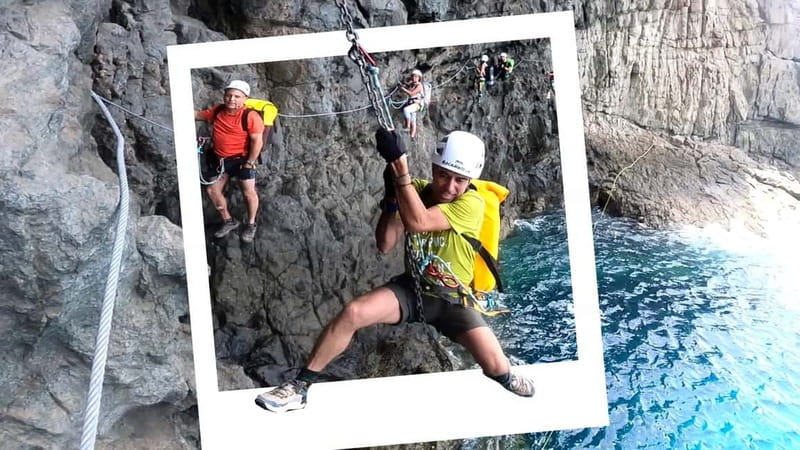
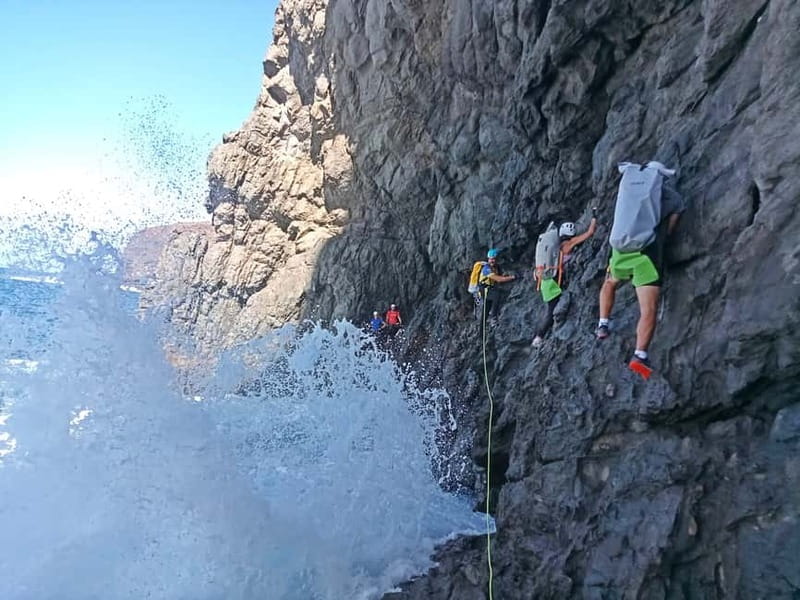
Once you reach the coastal level, the route changes from vertical descent to climbing beside the sea. You follow a marine Via Ferrata, using fixed aids and the supplied safety equipment.
The most distinctive part is the chain pass. Your guide teaches you how to use the equipment and move along the rock. It is less about technical climbing skill than about placing your feet, keeping calm, and trusting the system while staying aware of the sea below.
This section gives the tour its strong sense of place. You are not climbing indoors or on an isolated wall. You are moving across Atlantic rock with water immediately nearby. That setting is the reason the tour feels different from a normal canyoning or zipline outing.
The sea also creates a practical limitation. This is an exposed coastal activity, and conditions can change. In one case, bad weather meant the marine Via Ferrata and zipline were not carried out because the guide judged them too risky. That is a drawback if you have booked specifically for the headline attractions, but it is also the right call from a safety point of view.
The guide can make the experience feel manageable, but no guide can guarantee every planned section in poor weather. Keep that in mind when judging the value of the booking.
Same canopy, a different kind of drop:
- Via Ferrata & Zip Line Zafarraya
★ 5.0 · 22 reviews - Caminito del Rey: Vía Ferrata Rappeling & Zip-Lining
★ 5.0 · 22 reviews - Toledo Day Trip From Madrid including Zip-line Ticket
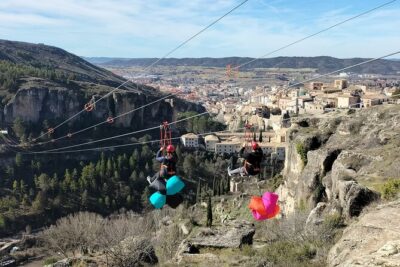
★ 4.0 · 9 reviews - Jumping in Zipline with Unique Views of Cuenca
★ 5.0 · 9 reviews
The sea zipline and climb to 125 meters
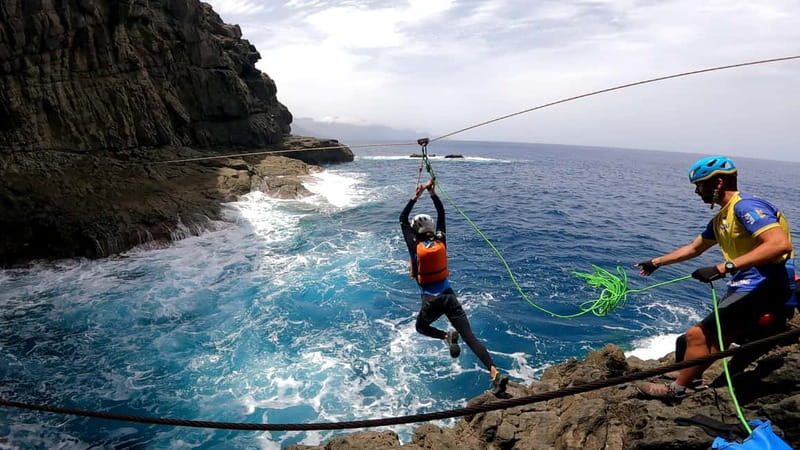
The zipline is the tour’s most striking feature. You fly 35 meters above the waves, using the line to return toward the rock face.
It is short in distance but big in sensation. You have already hiked, descended by rope, and crossed the marine Via Ferrata, so the zipline arrives as a reward after the most technical sections. The open view and the sound of the water below give it a far different feel from a zipline in a forest park.
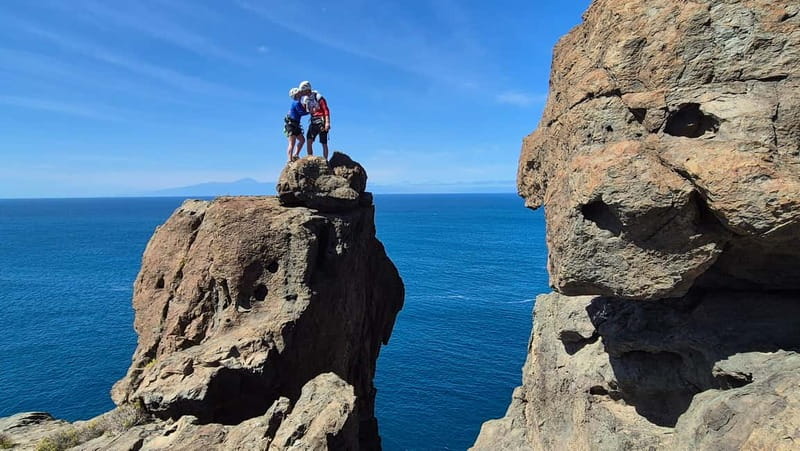
After the crossing, you climb the Atlantic rock using straightforward climbing techniques. The route leads back to the top of the formation, above 125 meters over sea level. From there, you can look down over the coastline and see the route you have just completed.
This part requires stamina. Even if each individual action is manageable, the day adds up: hiking first, rope work next, climbing beside the water, a zipline, and another ascent. One useful description of the physical level is medium overall, with the adrenaline making it feel harder. I would call that fair, but anyone with low fitness should take the provider’s warning seriously.
Snorkeling brings a calmer pause
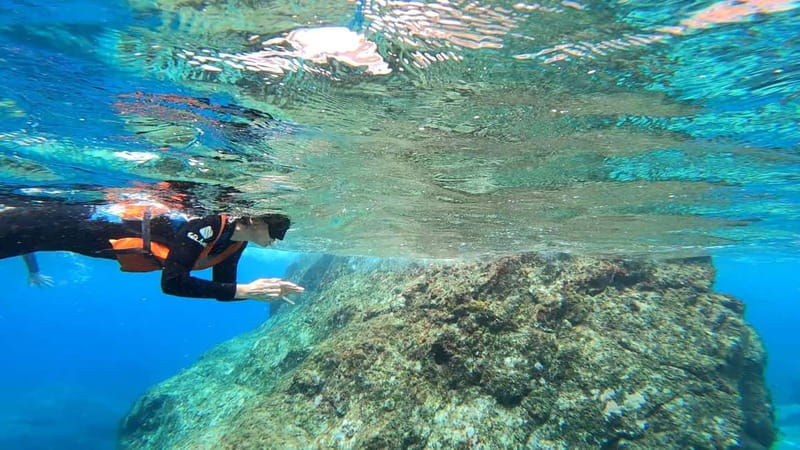
The snorkeling section gives the day a welcome change of rhythm. After the abseiling and Via Ferrata, getting into the sea can feel peaceful rather than intense.
A wetsuit and snorkel kit are included. The water and sea conditions determine how enjoyable this part is, so it should not be treated as a guaranteed long swim in perfect visibility. Still, it adds a useful contrast to the rock work and gives you time to notice the coastal environment at a slower pace.
You must be able to swim. The activity is not suitable for non-swimmers, and you should be comfortable entering the sea after a physically demanding route. If you dislike cold water or are hoping for a beach day, this is not the right way to spend your time.
Bring your own swimwear and towel. Sunscreen is also important, even though much of the activity involves rock and sea rather than lying on the beach.
Pablo’s guiding style and group size
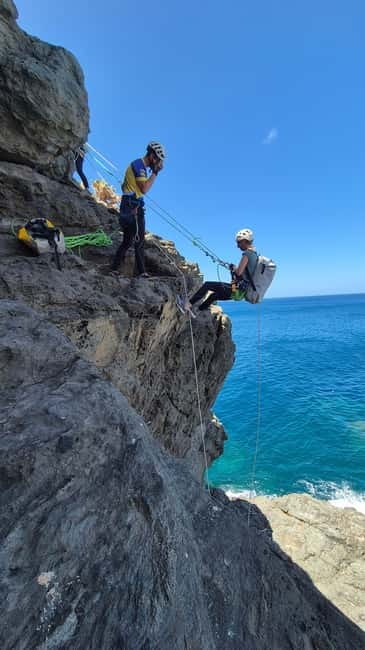
The small group limit of eight is a real advantage here. Technical activities work better when the guide can watch each person, explain the next movement, and give people time to steady themselves.
Pablo is the named guide associated with the experience. His approach combines safety instruction, humor, and local stories. He is described as supportive and entertaining, while also making firm decisions when conditions are not safe. That balance matters more than a loud or flashy personality on a route involving ropes and exposed rock.
Pablo also adds context during the hike, stopping to explain parts of the area’s history. This makes the tour feel personal rather than mechanical. You are not simply being moved from one challenge to another.
Instruction is available in English and Spanish. You should still tell the guide early if you are nervous, inexperienced, or unsure about a technique. The activity welcomes people without previous coasteering experience, but it does not suit people who want to stay well clear of heights and open water.
What the $81 price includes
For $81, you receive a guide, insurance, helmet, harness, wetsuit, snorkel equipment, a snack, and a photo report. That is solid value for five hours, especially because specialist safety equipment and instruction are included.
The photos are useful because your hands will be occupied during the main moments. You are unlikely to take good pictures while abseiling or crossing the Via Ferrata, so a free photo record adds something practical to the package.
You should still bring water and perhaps extra food. The listed snack is welcome, but the outing can last five hours or more, and one person specifically advised packing additional snacks and plenty of water. The activity is physical, and you should not rely on a small included snack to carry you through the whole day.
There are also costs and limits to consider. Hotel transfers are not provided, and you need to reach the Playa de Caleta meeting point yourself. If weather cancels the marine Via Ferrata or zipline, the value of the day changes, although you still receive the guided hike, local interpretation, and whatever safe sections can be completed.
Free cancellation is available up to 24 hours before the start time, and you can reserve now and pay later. Those policies help if your Gran Canaria plans are still shifting, but they do not remove the need to check the forecast before committing to an adventure over the sea.
Who should book this experience?
I would recommend it to fit adults and older teens who want a serious active day rather than a sightseeing tour. The minimum age is 16, and the provider lists the maximum age as 55. It is best suited to someone who can hike, climb, swim, and stay calm while exposed above the water.
It is especially good for:
- People who want several adventure activities in one outing
- First-time coasteering participants who want instruction
- Anyone interested in Agaete’s volcanic and aboriginal past
- Couples looking for an unusual active excursion
- Confident swimmers who enjoy the sea and heights
I would skip it if you have vertigo, a fear of heights, back trouble, limited mobility, low fitness, or little confidence in the water. The provider also sets a maximum weight of 110 kilograms.
The clothing rules are worth taking seriously. Wear sports clothes, hiking boots or sturdy sports shoes, and avoid shorts. Bring swimwear, a towel, sunscreen, water, and a jacket. Keep your belongings small because dry-bag space is limited.
Should you book the Agaete coasteering tour?
Book it if the idea of combining a cliff hike, abseil, marine Via Ferrata, sea zipline, climbing, and snorkeling sounds better than spending the day on a bus or beach. At $81, it gives you a lot of guided activity and equipment for the time.
Do not book it simply because the zipline looks exciting. You must first hike to the high point, descend the cliff, work along the sea, and climb again. The biggest reward comes from completing the whole sequence, not from one isolated attraction.
My practical advice is to reserve this for a day when you have energy to spare, arrive well equipped, and accept that weather may change the route. If you are fit, can swim, and want a memorable view of Agaete from both the cliff and the sea, RockNatour’s outing is a strong choice.
FAQ
Where does the Agaete coasteering tour meet?
The meeting point is in the parking area close to the roundabout at Playa de Caleta in Agaete.
How long does the experience last?
The activity lasts five hours, although the experience can take more than five hours depending on the pace and conditions.
Is hotel pickup included?
No. Hotel pickup and drop-off are not included, so you must arrange your own transport to and from the meeting point.
What languages does the guide speak?
Instruction is available in English and Spanish.
How large is the group?
The group is limited to eight participants.
What activities are included?
The route includes hiking, abseiling, a marine Via Ferrata, climbing, a 35-meter zipline above the sea, snorkeling, and a guided explanation of the area’s geology and volcanic past.
Is equipment provided?
Yes. The tour includes a harness, helmet, wetsuit, snorkel kit, and insurance. A professional guide also provides instruction and safety support.
What should I bring?
Bring swimwear, a towel, sunscreen, water, breathable clothing, sportswear, and hiking boots or sports shoes. A jacket may also be necessary.
Can children join the activity?
No. The activity is not suitable for children under 16.
Can the itinerary change because of weather?
Yes. Poor weather can make the marine Via Ferrata or zipline unsafe, and the guide may decide not to operate those sections.
Just added around Spain
- Fly Over Toledo: Urban Zipline over Tagus River★ 5.0 · 7 reviews
- Via Ferrata & Zip Line Zafarraya★ 5.0 · 22 reviews
- Toledo Day Trip From Madrid including Zip-line Ticket★ 4.0 · 9 reviews
- Jumping in Zipline with Unique Views of Cuenca★ 5.0 · 9 reviews
- Salou: Bosc Aventura Salou Zip Lining Experience★ 4.6 · 8 reviews
- Madrid: Zip line circuits high in the trees★ 5.0 · 4 reviews
- Gran Canaria: Zipline and Mountaineering Tour★ 4.8 · 9 reviews
- Elda: El Bolón via ferrata with zipline and abseiling★ 5.0 · 4 reviews
Spain Zipline Tours, compared.
Climbing + Zipline + Via Ferrata + Cave. Adventure route in Gran Canaria
Read our review →
Gran Canaria: Guided Via Ferrata and Zipline Adventure
Read our review →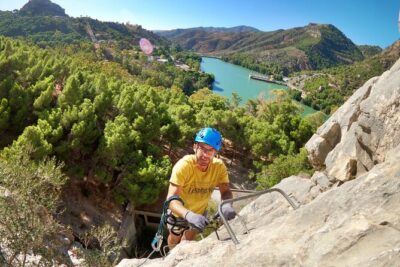
Caminito del Rey – Via Ferrata & Zip Line Adventure
Read our review →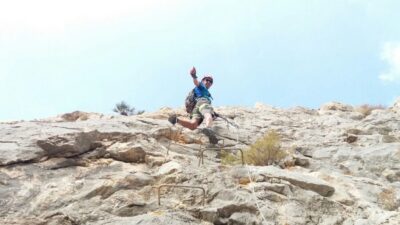
Caminito del Rey: Vía Ferrata Rappeling & Zip-Lining
Read our review →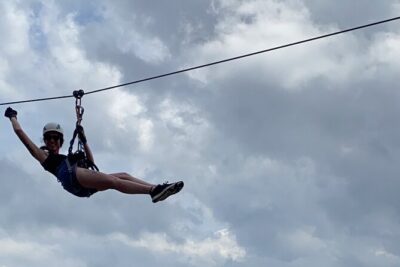
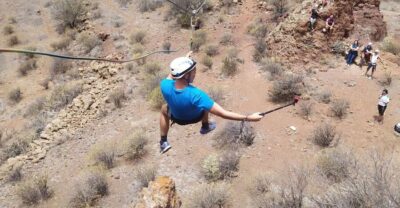

Toledo Day Trip From Madrid including Zip-line Ticket
Read our review →Browse the lists this tour appears in